Sri Chinmoy Self-Transcendence 3100 Mile Race - 2026
By Tejvan Pettingerauthor bio »
20 October
About the author:
Tejvan organises short-distance running and cycling races for the Sri Chinmoy Marathon Team in his home city of Oxford. He is also a very good cyclist, having won the National hill climb championships in 2013 and finished 3rd in the National 100 Mile Time Trials in 2014.
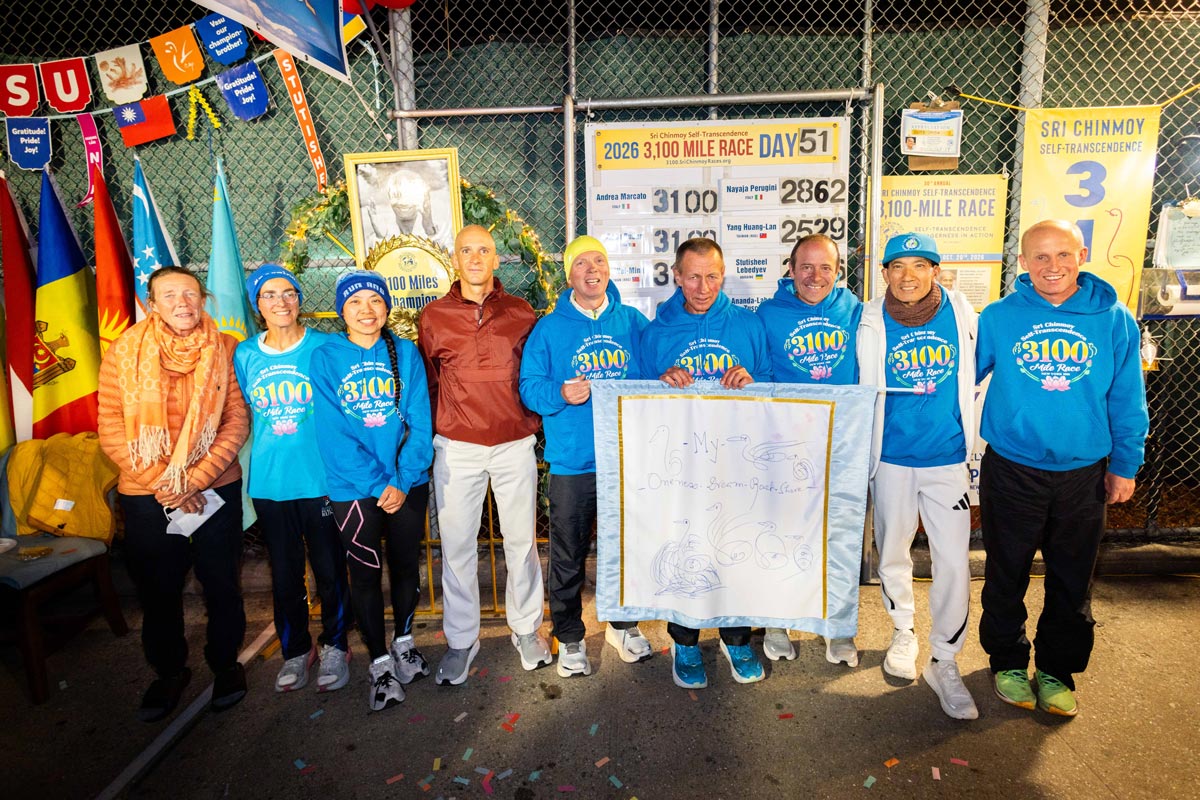
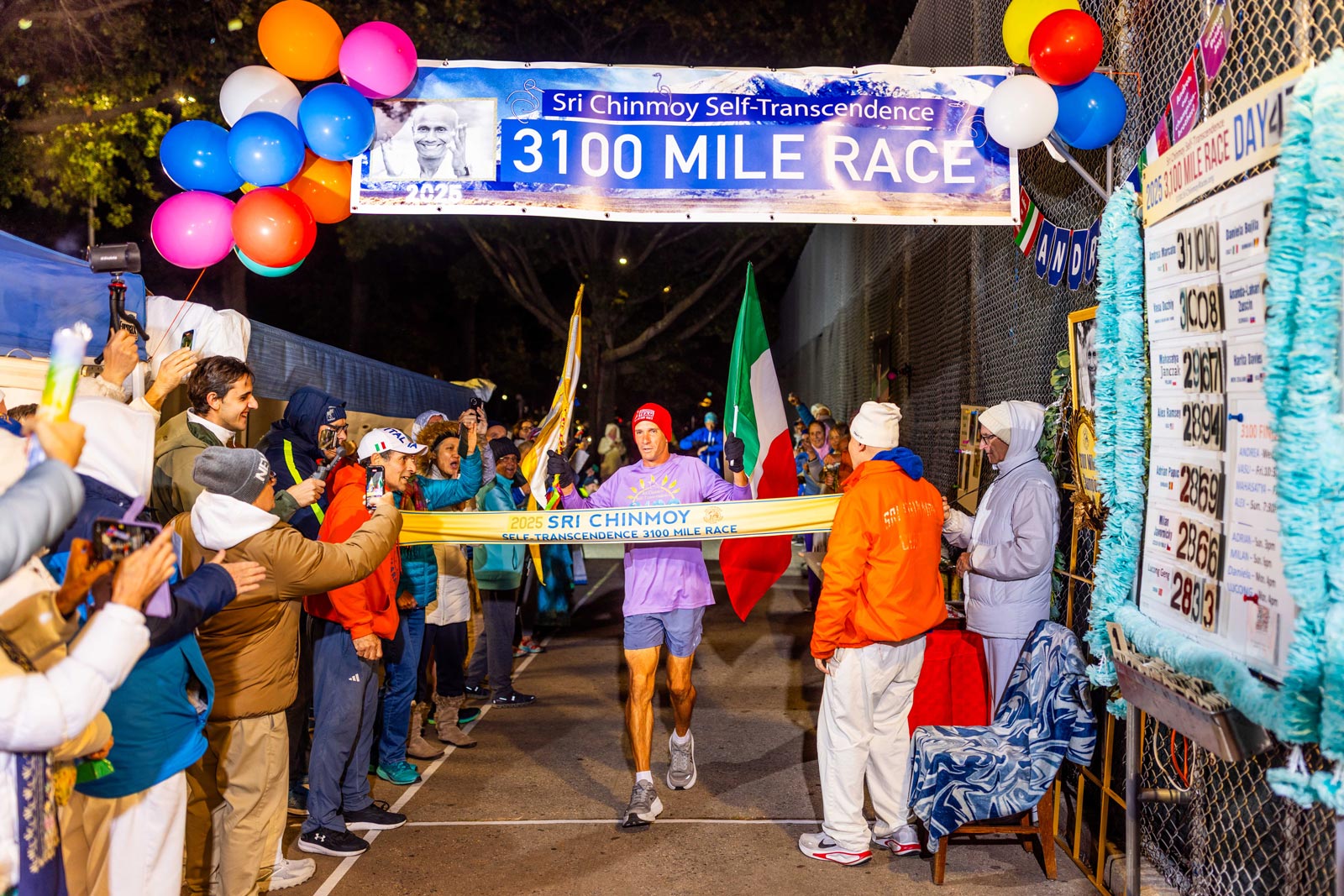
Andrea Marcato of Italy won the 30th Sri Chinmoy Self-Transcendence 3,100-Mile Race, covering the distance in 45 days 03:11:28. It was his seventh consecutive win.
Annabel Hepworth of Australia was the first woman home, finishing fourth overall in 49 days 09:03:02.
The nine runners of this years race.
2026 Sri Chinmoy Self-Transcendence 3,100-Mile Race — final results
The Sri Chinmoy 3,100 Mile Race - All You Need to Know
By Tarit Stott
2 September
The longest certified road race in the world. What, where, who, why, how and when.
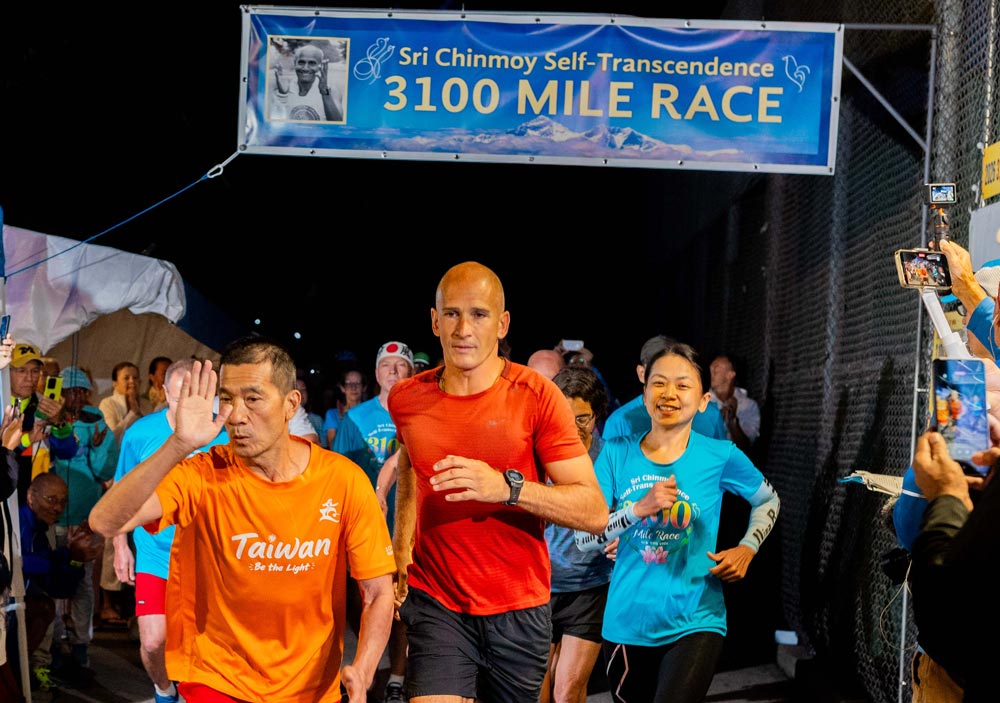
The annual Sri Chinmoy 3,100 Mile Race got under way in New York at 6 am on Sunday 30th August. Yes, you read that correctly — a three thousand, one hundred mile race.
In the past week or so, several thousand runners around the world will have completed an ultra-distance race on roads or beautiful trails. Meanwhile, nine intrepid adventurers have taken on this awe-inspiring challenge: running for up to 52 days around a small block in the New York suburb of Queens, from 30th August to 20th October.
What exactly is the 3,100 Mile Race?
In simple terms, it is an opportunity to run 3,100 miles on a 0.5488-mile loop around a suburban block in the borough of Queens, New York — a total of 5,649 laps, or 118 marathons. The course is certified by USATF, and every lap is meticulously recorded.
How does the race work?
The course is open for 18 hours a day, from 6 am until midnight, when there is a mandatory six-hour break for all runners.
Runners are encouraged to be at the course for 6 am to start each day.They can run continuously all day, and some do, but most break up the day with walking, food, massage and power naps.They can finish their day at a time of their choosing.
Most runners have a daily goal they want to hit, to keep them above the mythical redline — the daily total needed to reach the 52-day cut-off.
Isn't running a small loop boring?
Running a small loop for such a long time may sound crazy, but it is a familiar concept to multi-day runners. Conventional 24- and 48-hour races, and the slightly longer six- and ten-day races, are generally held on a 400-metre track or a small road loop.
They are far easier to manage logistically. The food and drink needed to survive the event are available every lap, along with medical attention and the all-important moral and physical support of personal helpers and race volunteers.
How can I follow the race?
Live webcams, the leaderboard and all the latest daily news are on the race website: 3100.srichinmoyraces.org/
You can also send messages to the runners. These are printed off each day and handed to them at the course, and they are hugely appreciated — it means a great deal to know that friends and fellow runners around the world are following their progress.
Want to visit and see it for yourself? This is where you need to get to. Do drop by and offer the runners some encouragement.
Adjacent to Thomas Edison High School
165-65 84th Ave, Jamaica, NY 11432
Why 3,100 miles?
The race is organised by the Sri Chinmoy Marathon Team. Its founder, Sri Chinmoy (1931–2007), was a world-renowned meditation teacher who also advocated physical fitness and running as a way of transcending our capacities and reaching new goals. The Marathon Team has been organising ultra races around the world for over 40 years, and this is the 30th edition of the 3,100.
The team in New York began by putting on its first ultra, over the classic 24-hour distance, in the late 1980s — when ultra running was nothing like the popular sport it has become today. The races gradually grew longer, until in 1997 the 3,100 miles was set as the ultimate challenge.
Although the race is officially 3,100 miles, most runners carry on after the customary celebration at that point and complete the thirteen extra laps needed to reach 5,000 km — the distance at which national and international rankings are maintained.
The 2026 race
This year ten runners from eight countries started the race, coming from Italy, Australia, Ukraine, Slovakia, Moldova, Taiwan, Russia and India. A list of all the runners, with a brief bio for each, is here:
What do I get for running 3,100 miles?
A good question. With the only tangible rewards being a T-shirt, a trophy and the odd spontaneous round of applause, runners must have their own reasons for taking on such a distance. You can watch the runner interviews here:
Five-time winner Andrea Marcato offered his own thoughts:
“The name of the race says it all. Self-transcendence means going beyond your own limits to improve yourself. You become a better runner, but also a better human being. You become more capable of extending your skills in any field of life.”
Extreme though it is, at the end of the day this is a race like any other, with a start, a course and a finish line. Just like an 800-metre or a 5,000-metre race, it is a lesson in preparation, goal setting, planning and execution — for several weeks at a stretch.
Tejvan organises short-distance running and cycling races for the Sri Chinmoy Marathon Team in his home city of Oxford. He is also a very good cyclist, having won the National hill climb championships in 2013 and finished 3rd in the National 100 Mile Time Trials in 2014.
Abhejali Bernardová
Jayasalini Abramovskikh
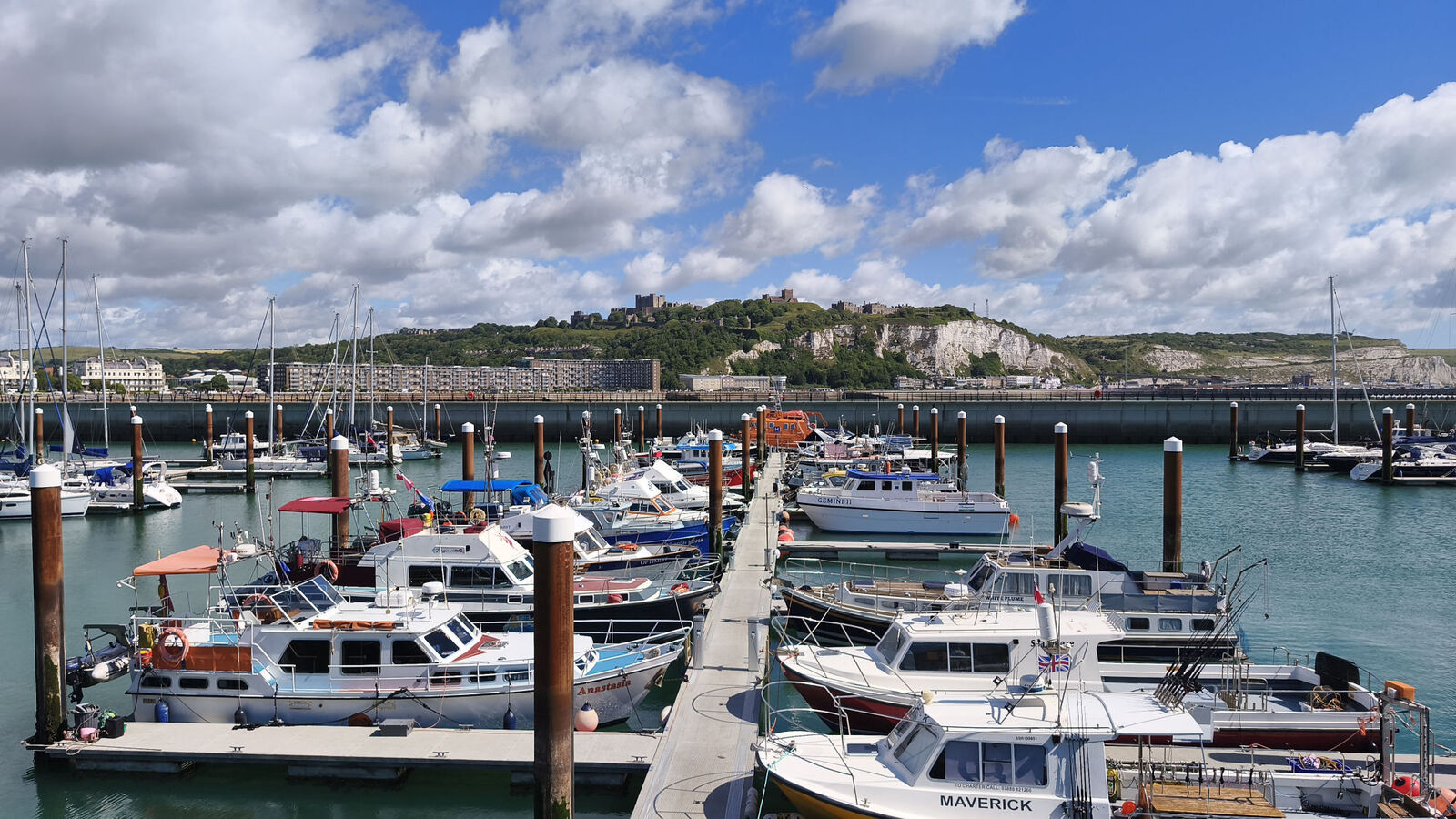
Support crew at Dover
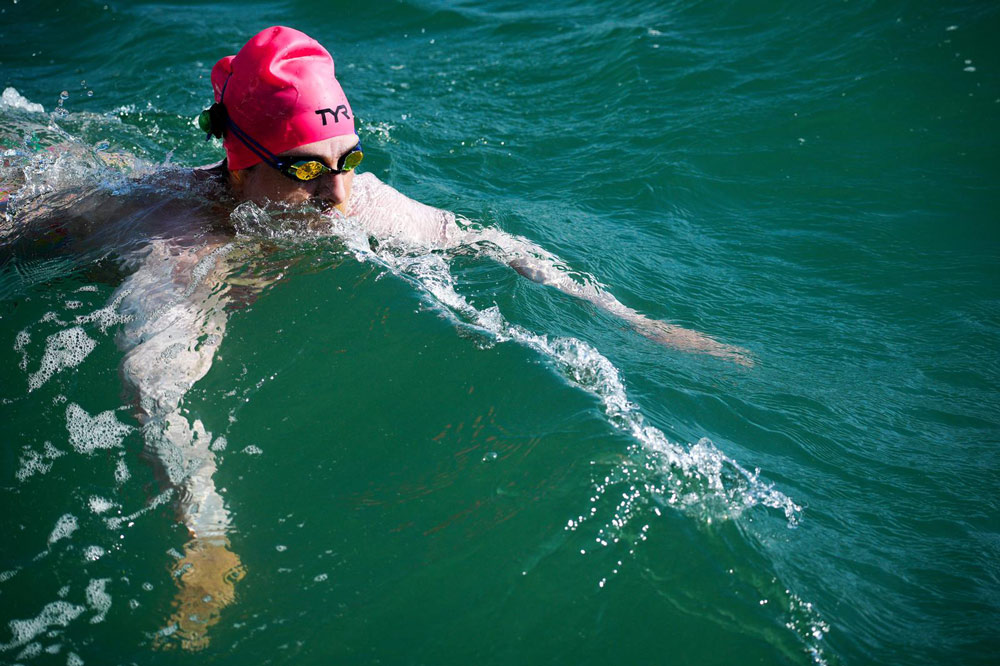
In the past 2 weeks there were 2 successful crossings of the English Channel by members of the Sri Chinmoy Marathon Team. Abhejali Bernardová completed her 3rd solo crossing of the Channel on July 28-29. She finished in a time of 17 hours 38 minutes, swimming breaststroke. She is the 5th woman and 18th person to complete a breaststroke crossing and the only person in the world to have swum the Channel in both freestyle and breaststroke.
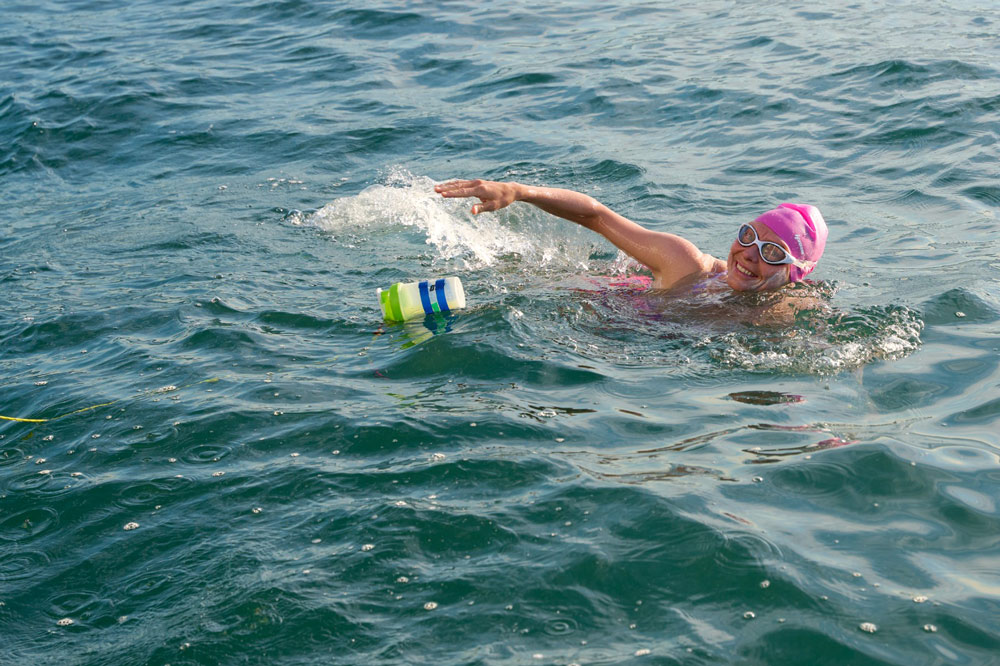
A week later, on August 7th, Jayasalini Abramovskikh crossed the Channel in a time of 18 hours 27 minutes, becoming the only person in the world to have completed both the Everest of long distance running, finishing the 3100 mile race in 2014, and the Everest of open water swimming, the English Channel. Her pilot Eddie also piloted Vijaya’s successful swim and he knows our team very well.
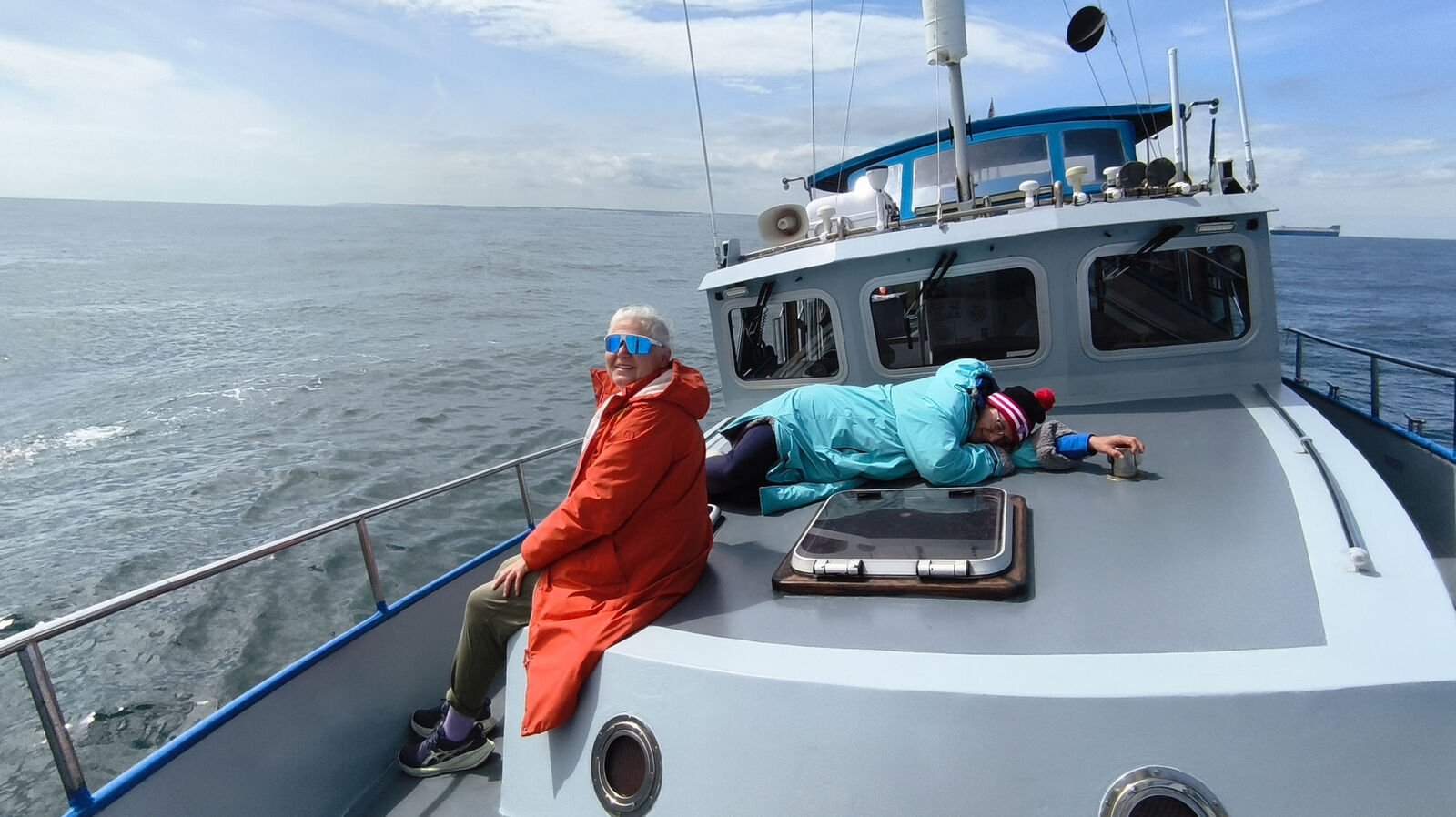
The two swimmers were helped by a great support crew: Dhavala, Shyamala and Nina (from Czech, for Abhejali’s swim).
Optimist with the Jersey ladies' relay in the distance
still windy
Abhejali is seasick
So peaceful
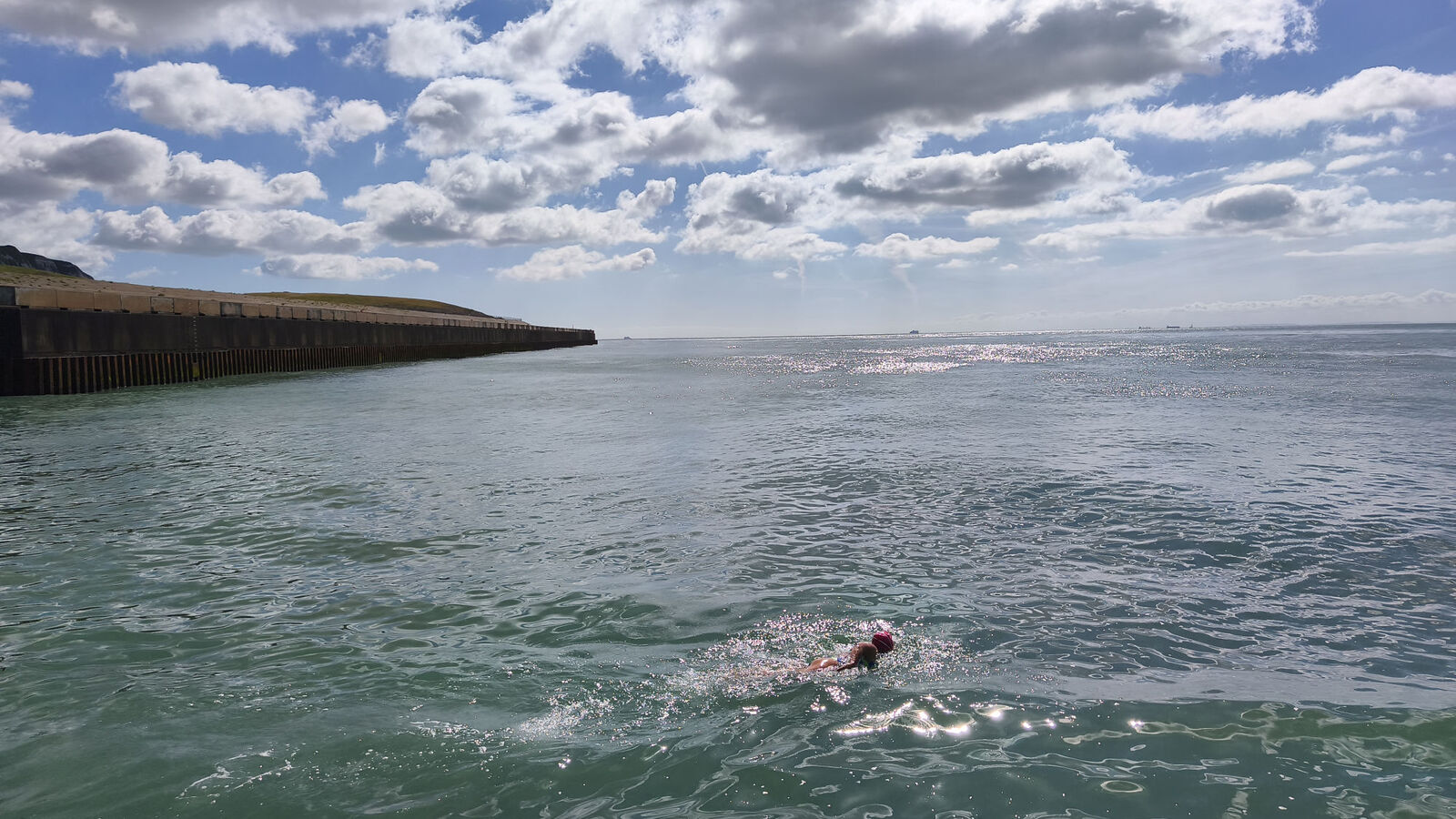
Cap Griz Nez in the distance
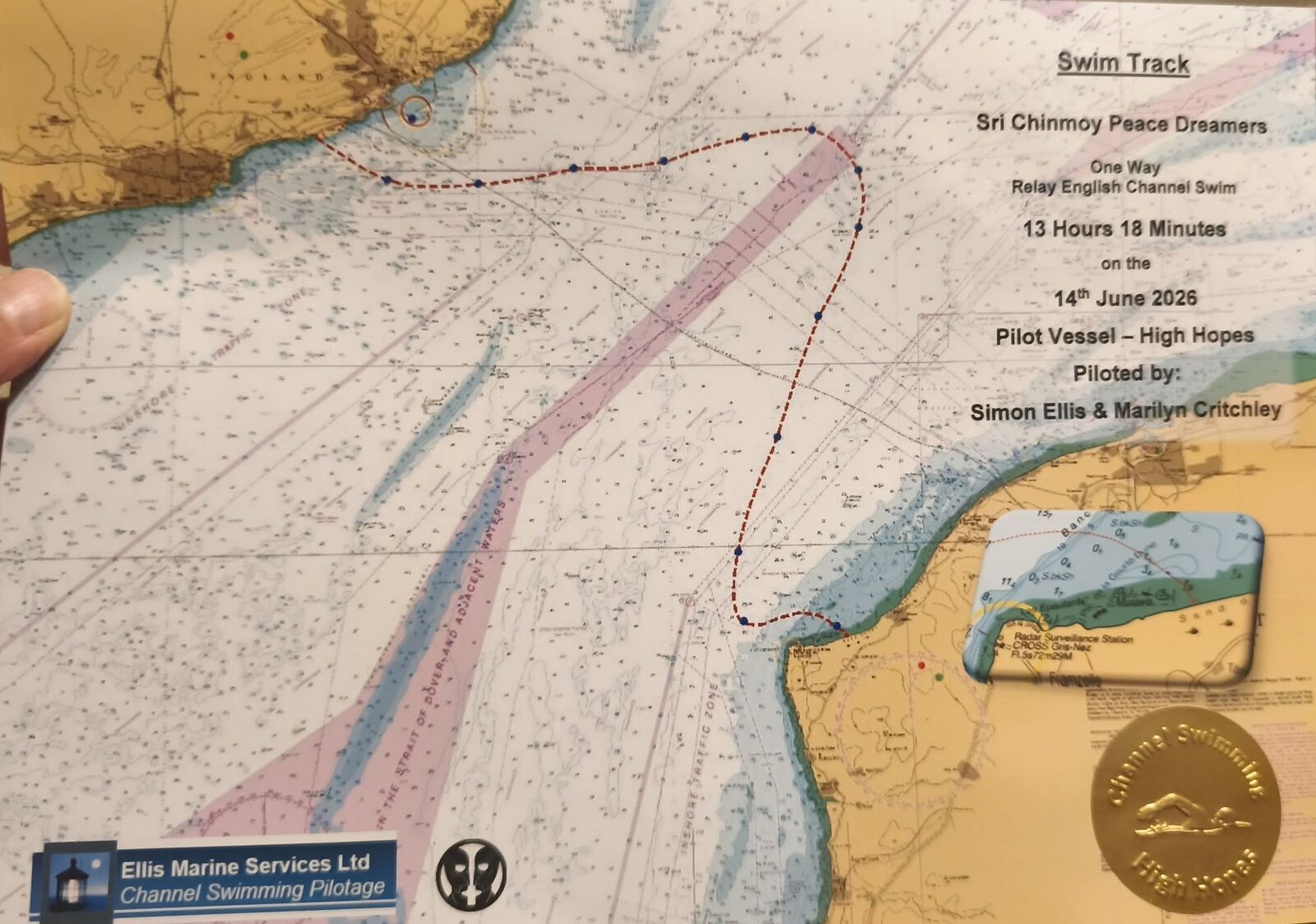
Our relay certificate with the swim track
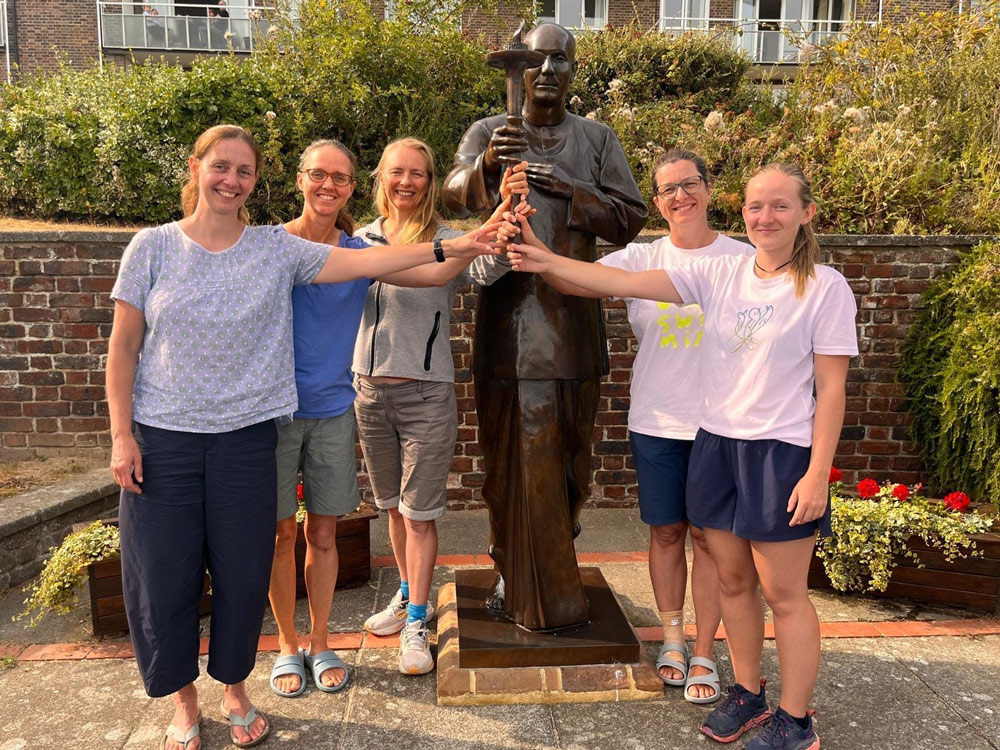
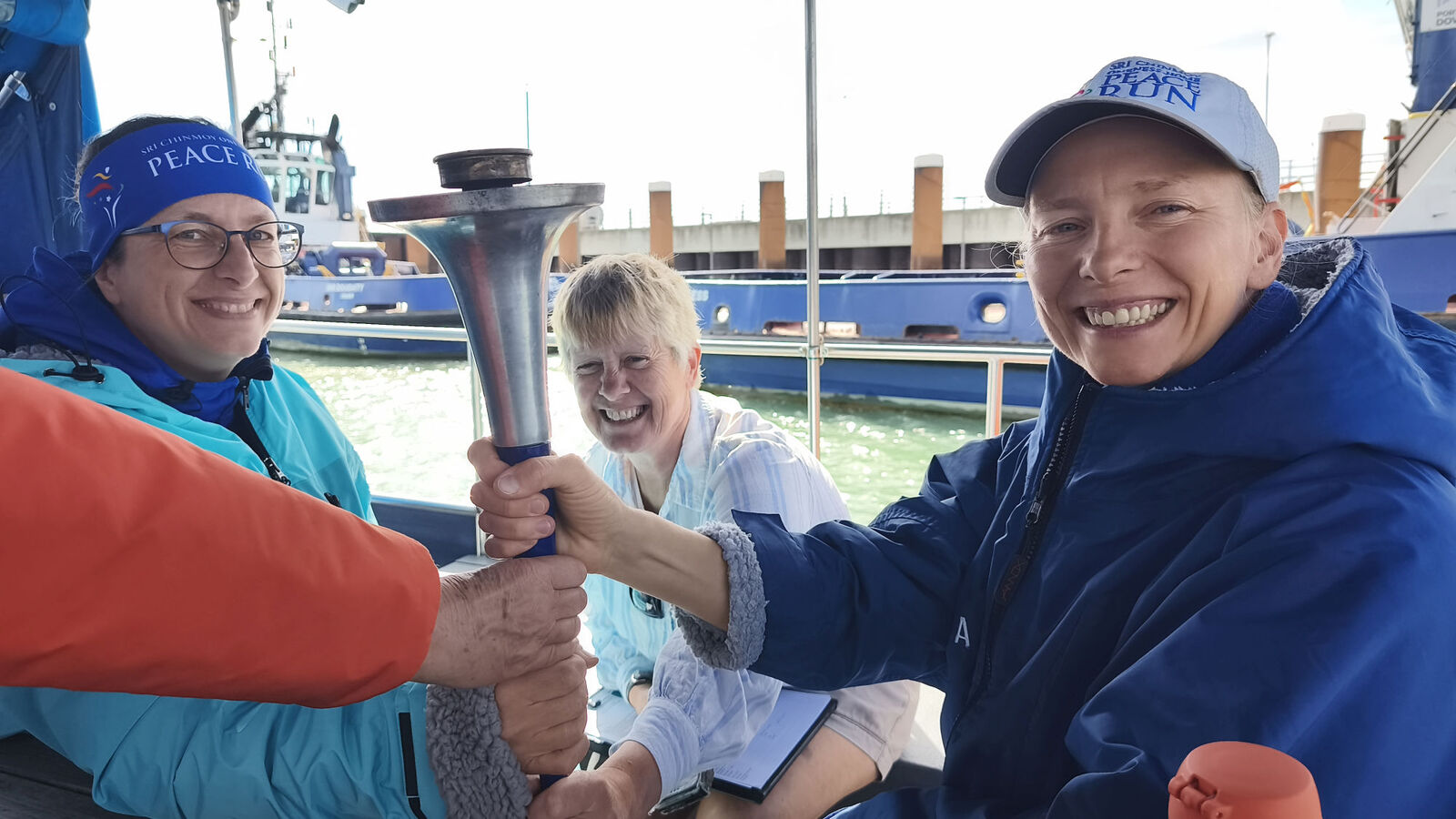
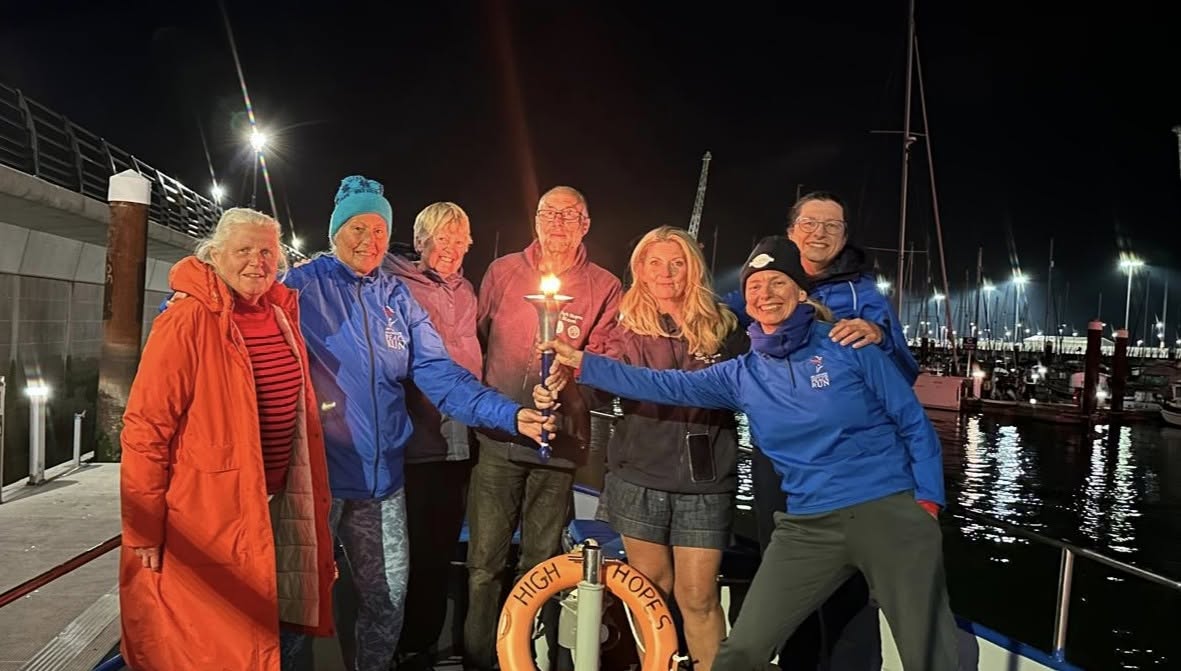
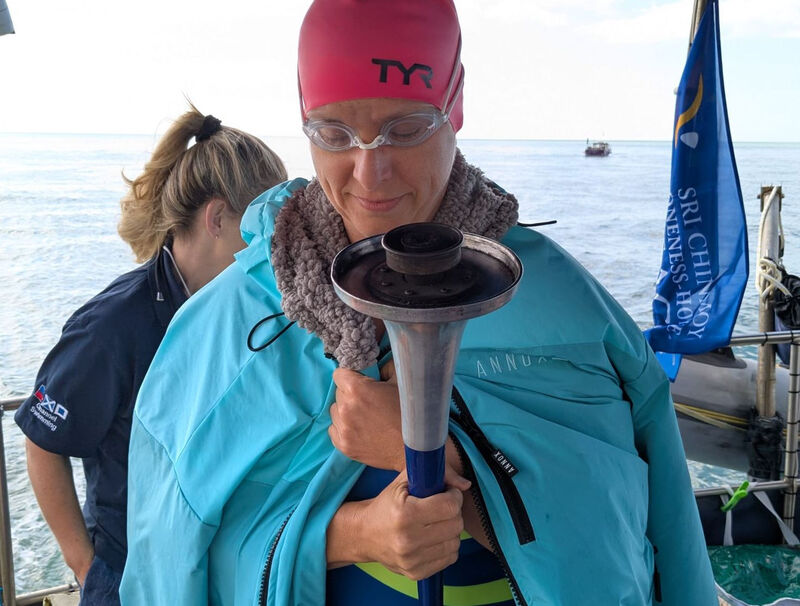
Sharing the Peace torch with the boat pilots and observer
The ladies relay team from the boat we started next to
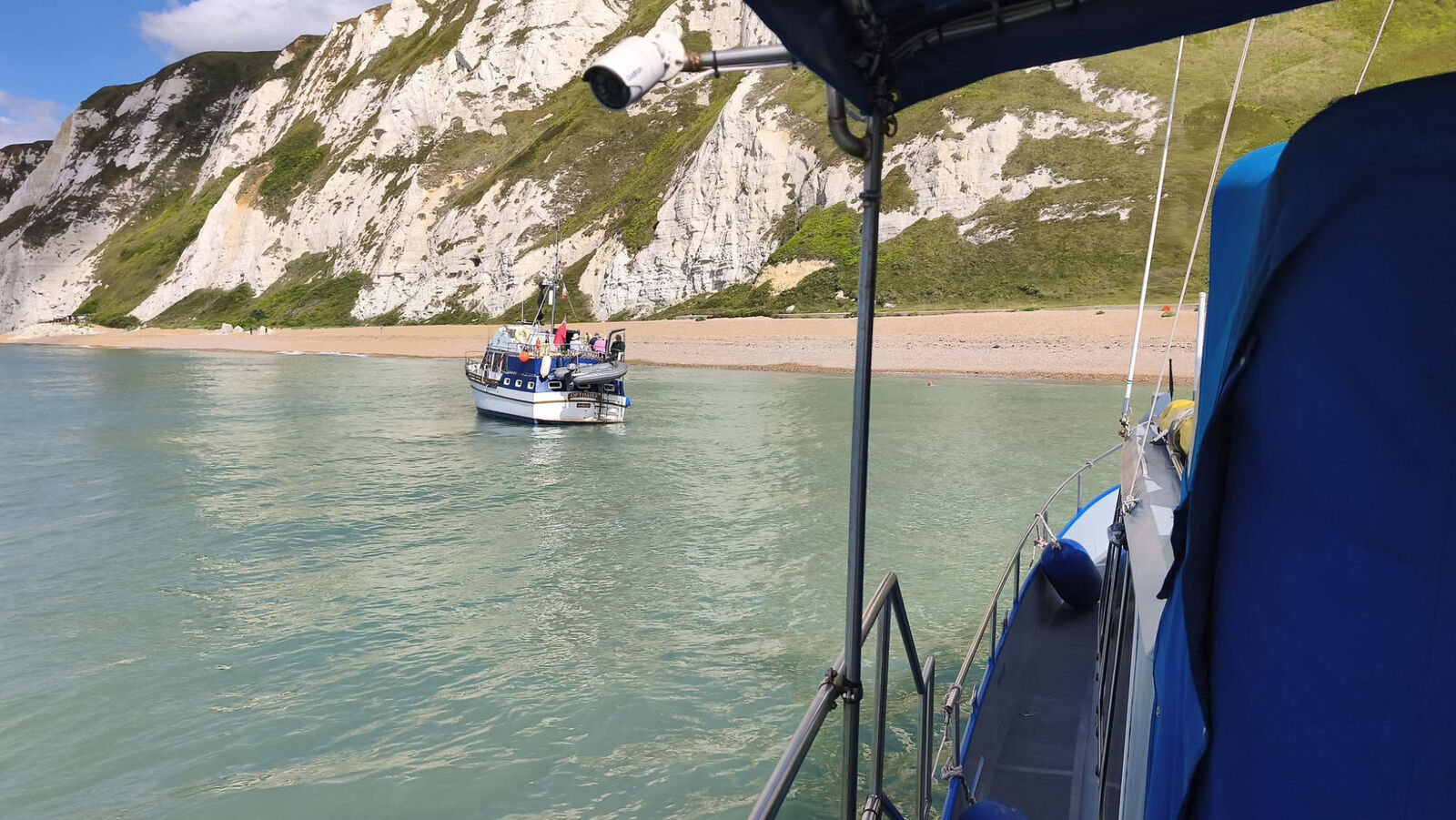
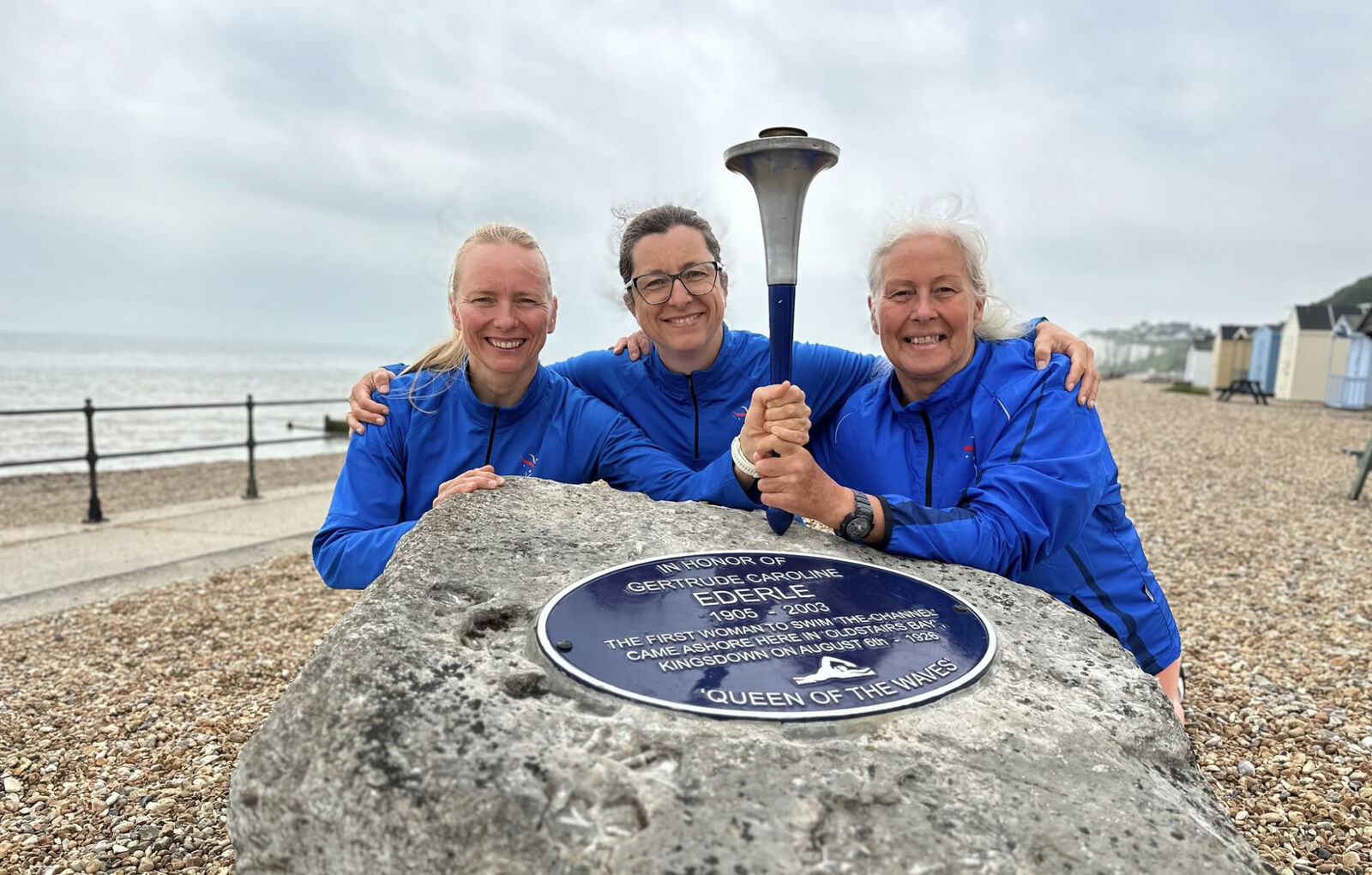
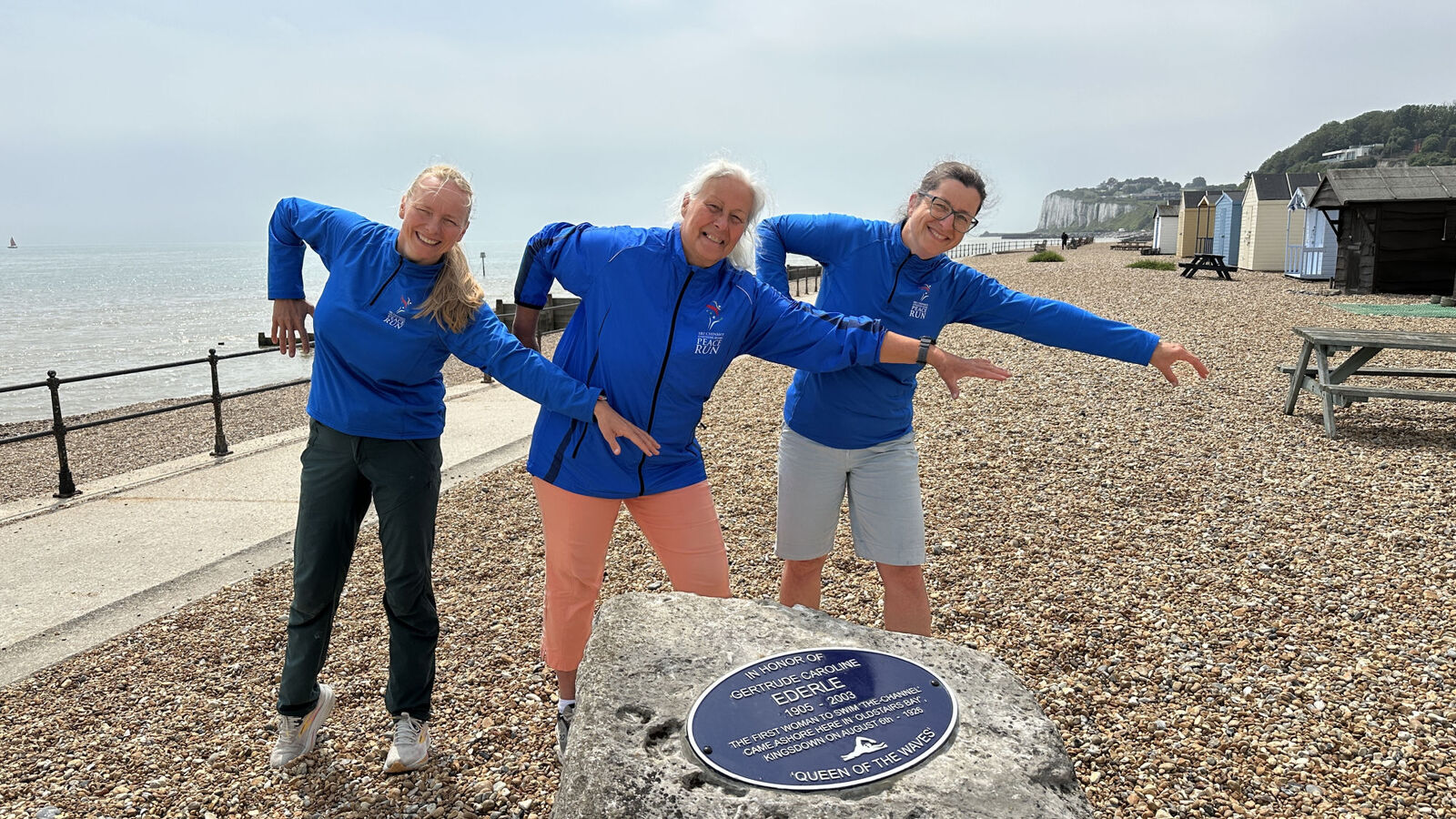
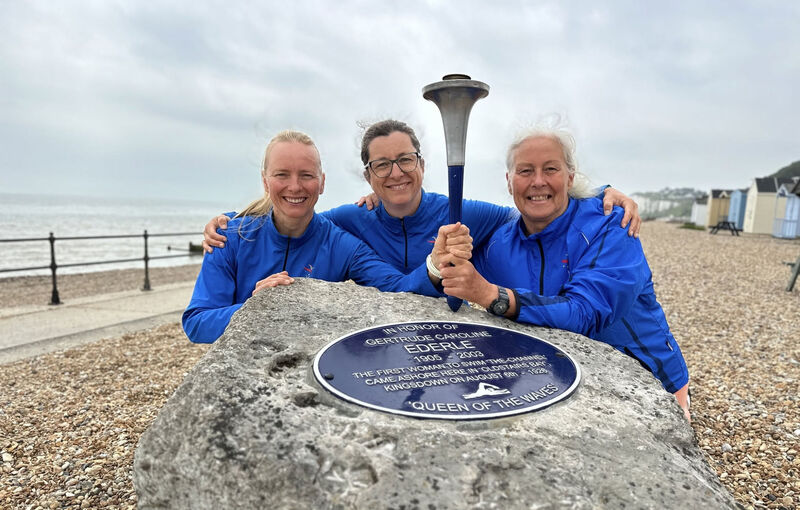
Kingsdown, at the Gertrude Ederle memorial
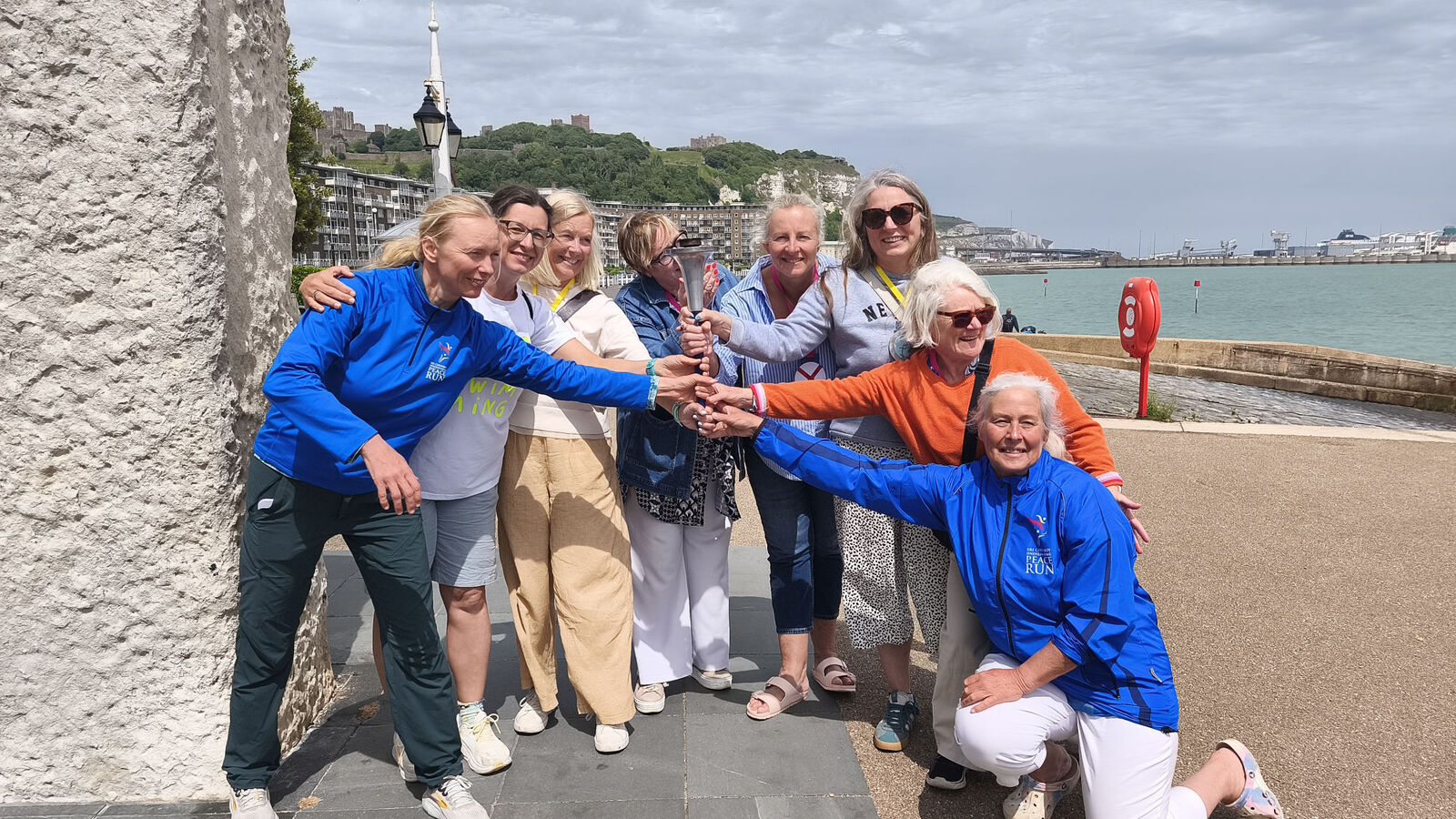
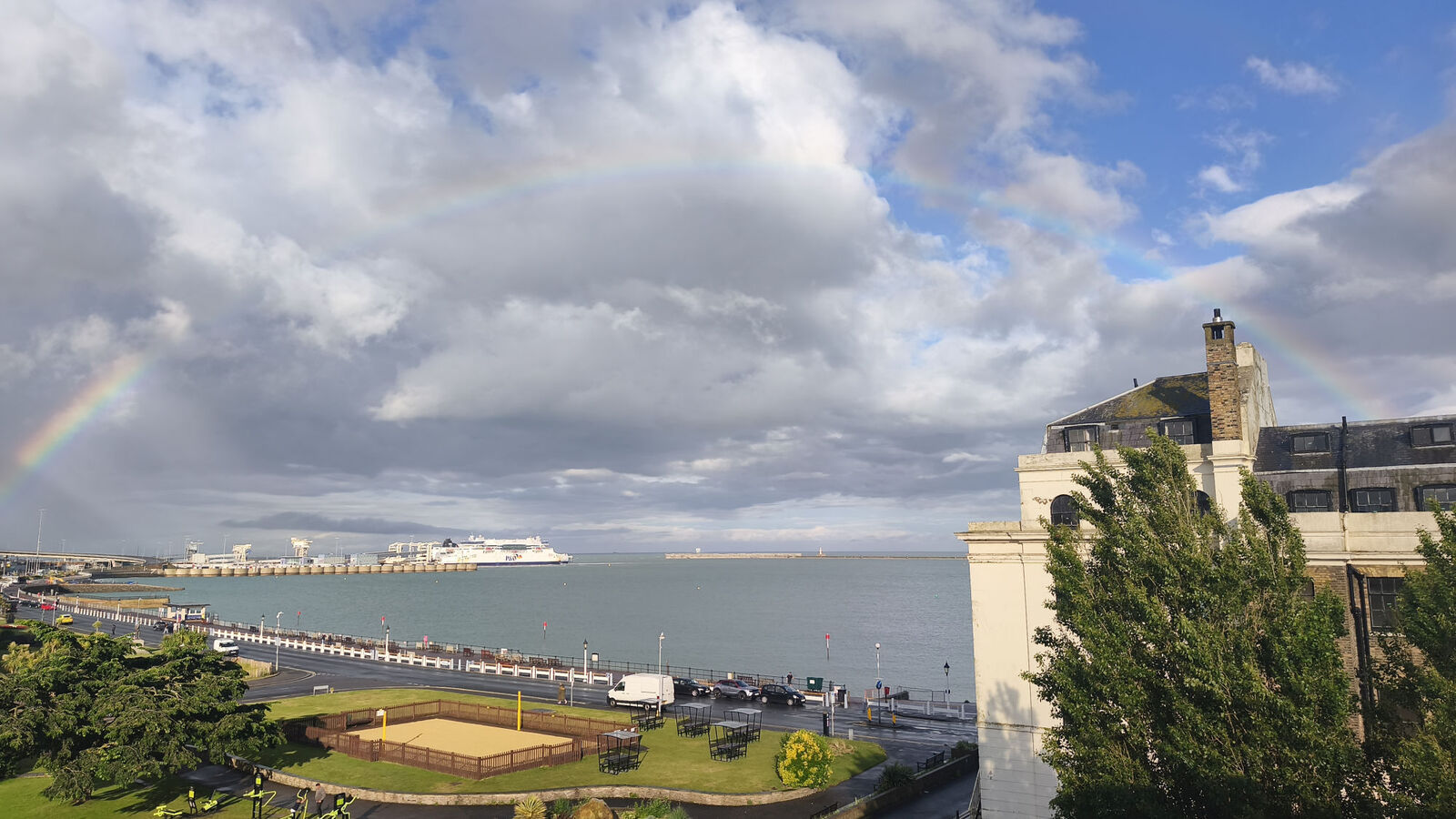
View to Dover harbour and swimmers beach
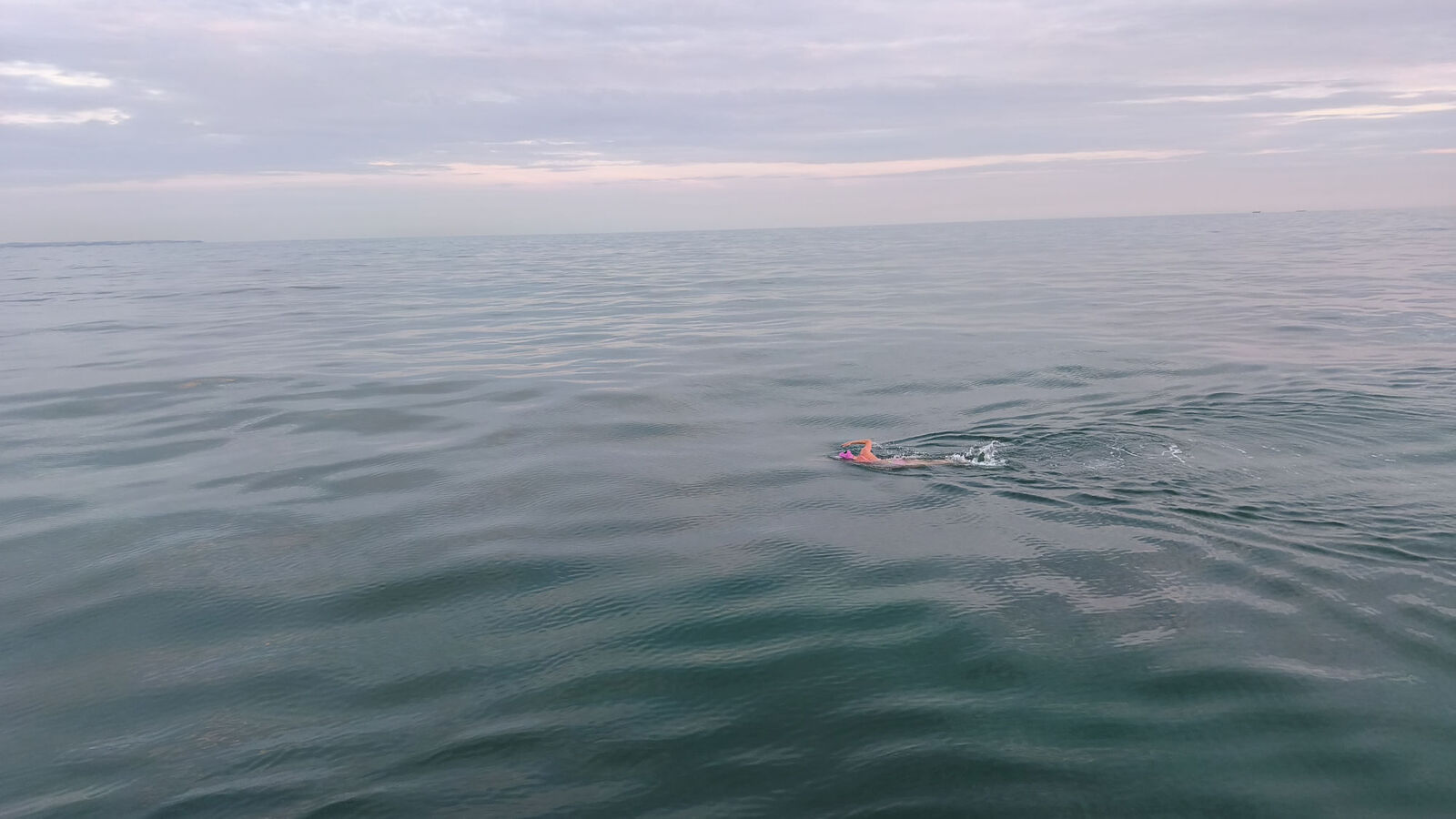
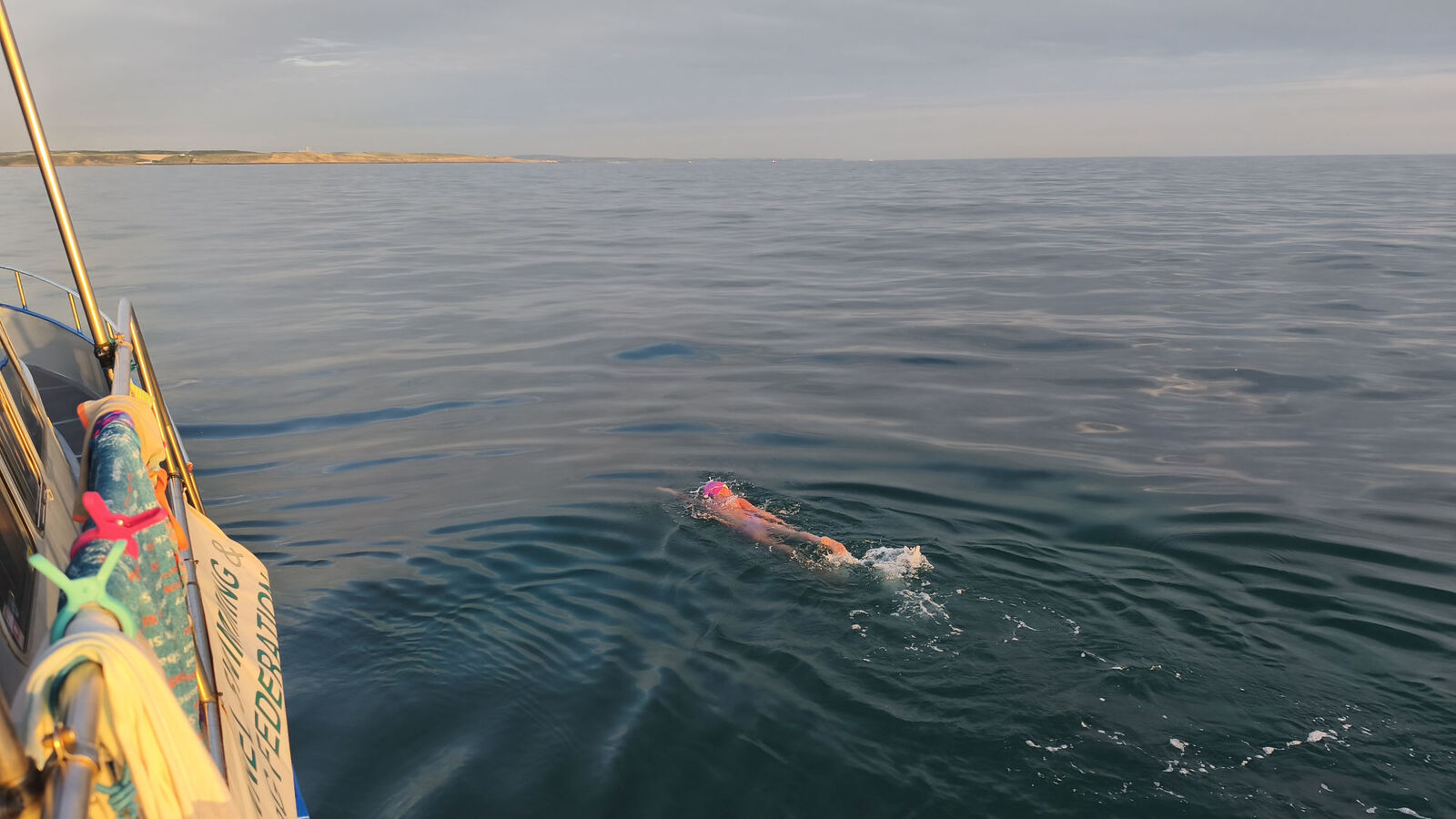
100 years ago, on August 6, 1926, barriers were broken in open water marathon swimming, when 19-year-old Gertrude Ederle from New York, an Olympic gold medallist of German descent, became the first woman to swim solo across the frigid English Channel. To honour this Centenary, three accomplished women ultra-athletes of our Sri Chinmoy Marathon team felt inspired to swim as a relay across the English Channel. A swim slot was booked last minute for mid-June, when the water is usually still quite cold, but doable for a relay. All later slots were already booked out.
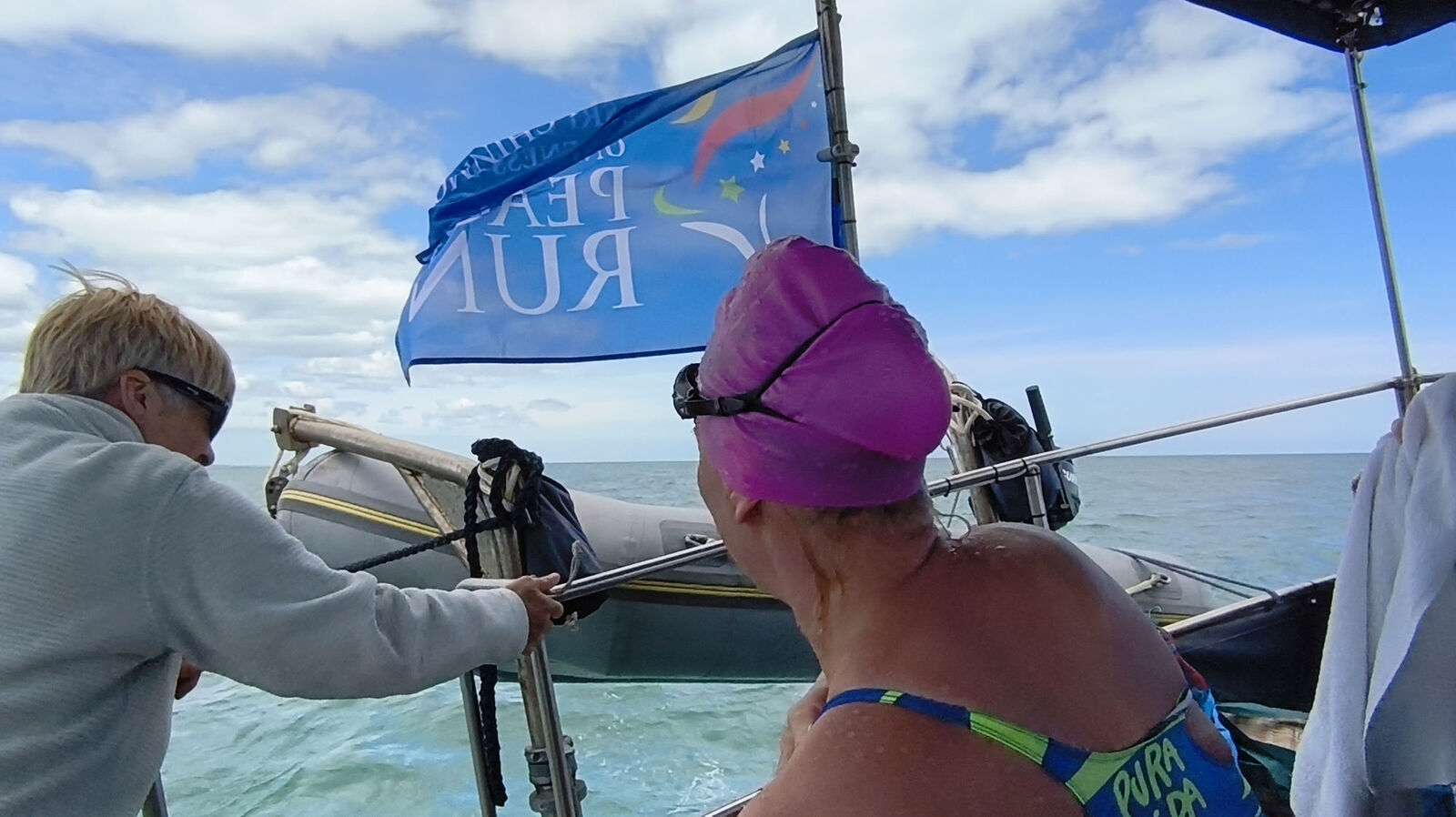
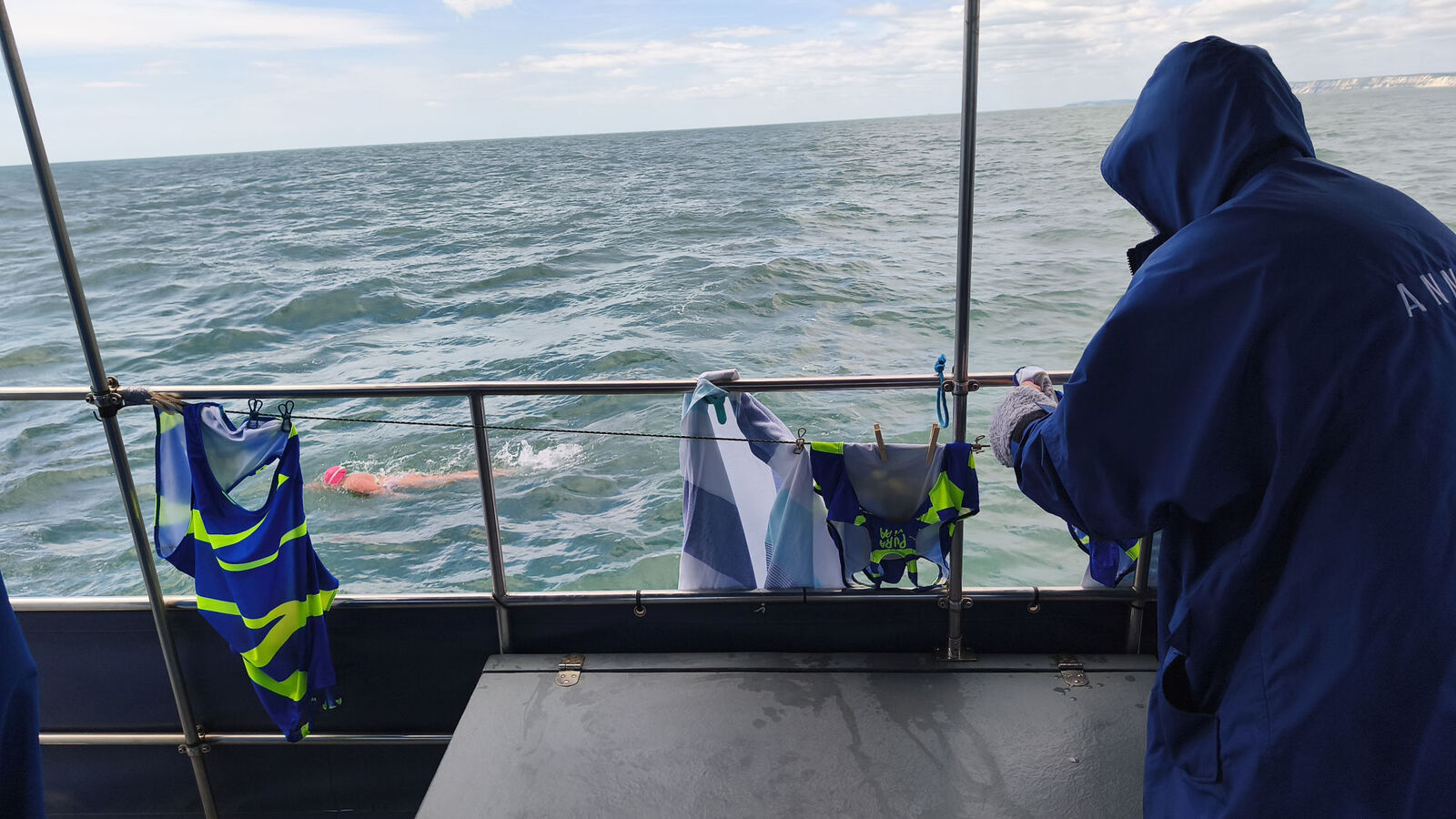
When Abhejali Bernardova (2x English Channel solo plus Oceans 7 finisher, CZ), Jayasalini Olga Abramovskikh (3100 mile runner, Lake Zurich finisher, RU) and Vasanti Niemz (69, 2x EC solo, several ultra-triathlons, DE) arrived in Dover, the water was still 13-14°C. Cold acclimatisation was needed even for a relay, where you rotate in hourly shifts, always in the same order. With a 3 person-relay the challenge is to have to get changed and then back into the cold water after very little time to warm up and rest in between, and with a risk to get seasick on board - which happened to Abhejali and helper Edwige for a few hours, in spite of seasickness patches and pills.
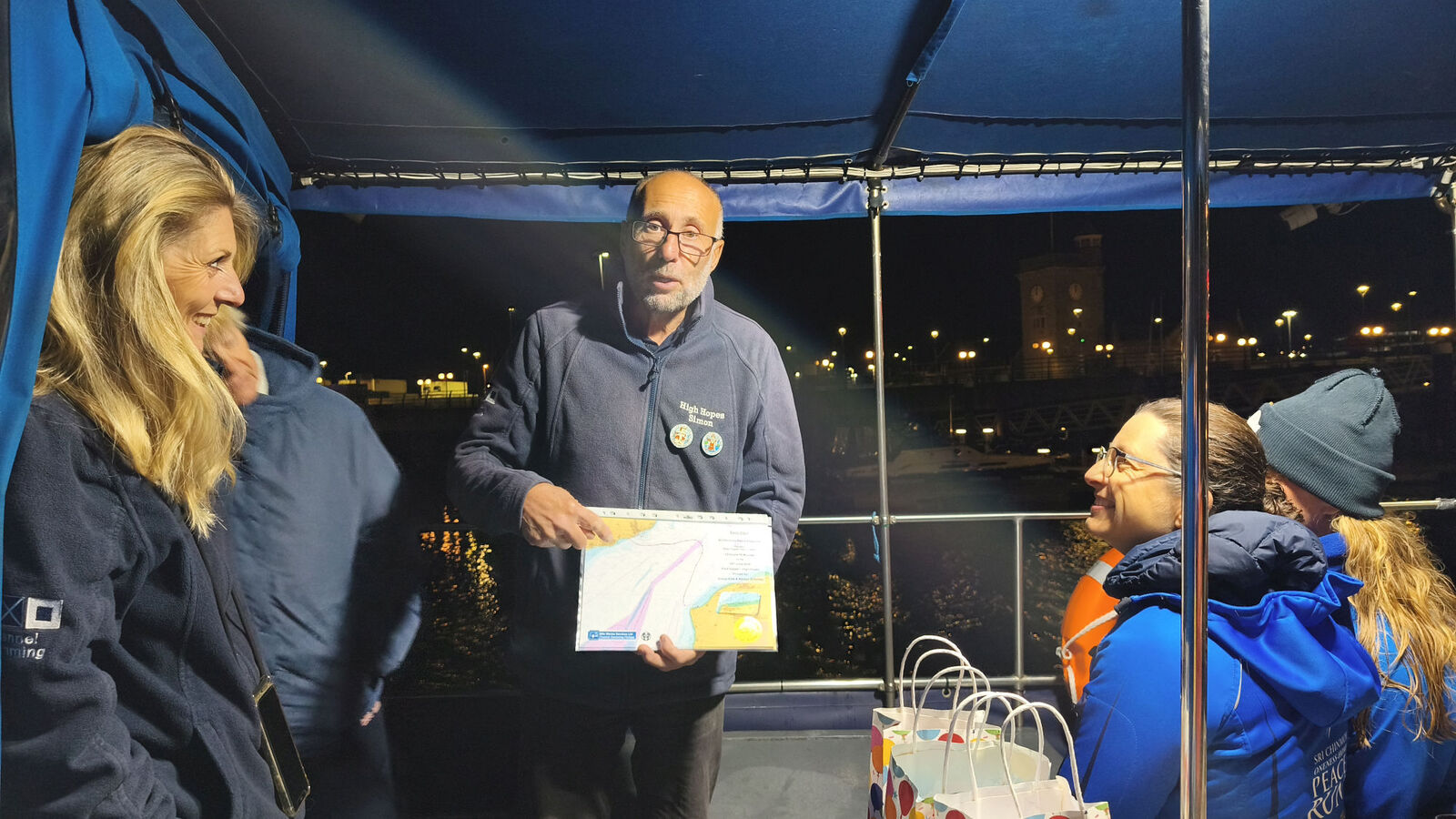
Watching the weather forecast is, apart from training, eating and resting (and meditating), one of the major activities before a swim, be it relay or solo. As usual, the forecast kept shifting - first we were supposed to start in the evening and swim through the night, but luckily the weather changed again and we were told to meet in the marina in the morning of Sunday, June 14th around 8 a.m., for the swim to start around 9. It is so much easier to get "into the groove" with the sun out. Edwige from France was our enthusiastic and happy last minute helper. Our boat with the uplifting name of High Hopes, was expertly piloted by Simon Ellis and Marilyn Critchlow. The water had warmed up slightly to 15°C.
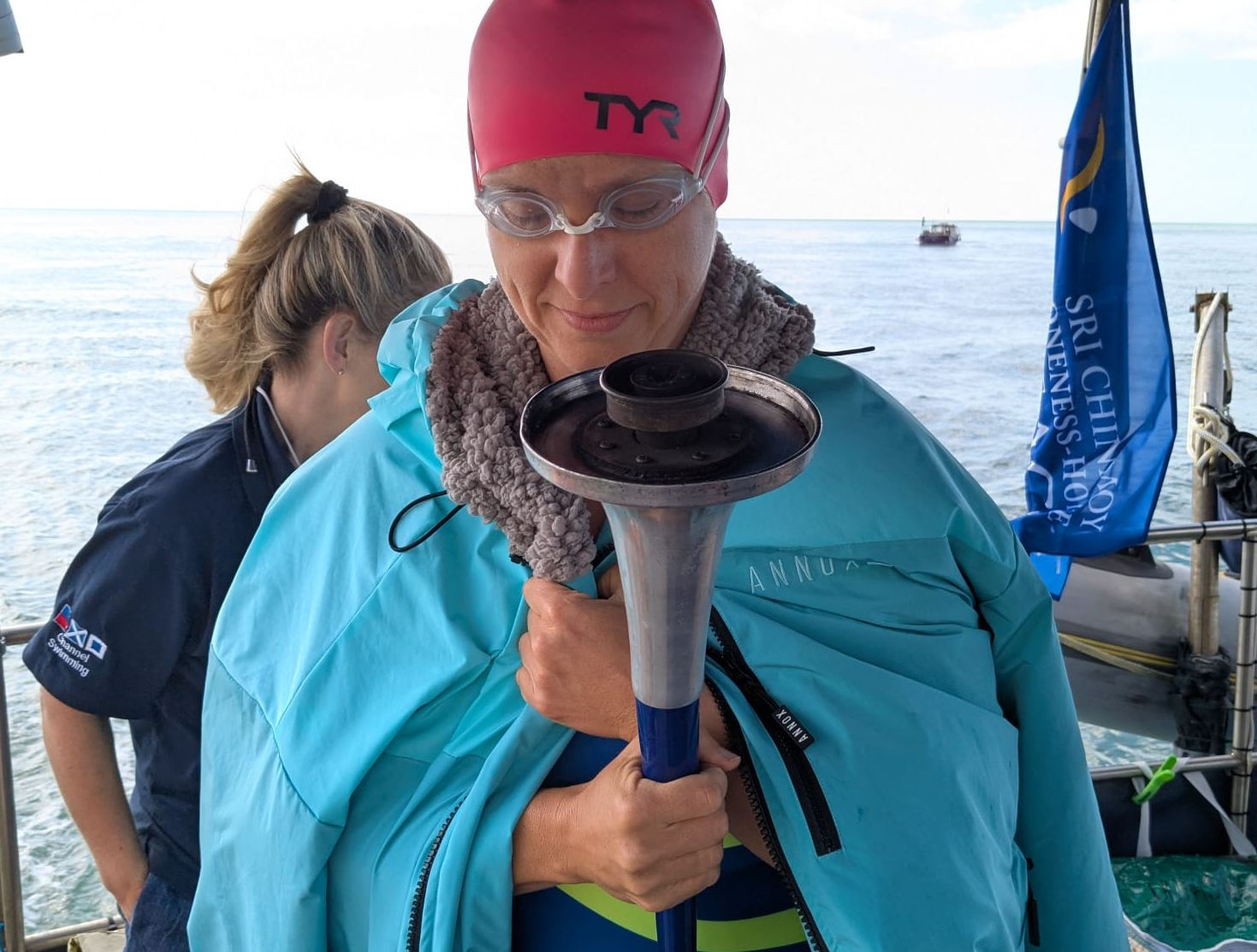
For more positive vibes we had decided to dedicate our relay to peace and gave it the name of "Sri Chinmoy Peace Dreamers". After all, teamwork makes the dream work - and with all the war memorials and remains along the British and French coast it felt so appropriate to visualise a peaceful world of friendship, cooperation and mutual support during our swim - actually this is the way English Channel relays work! We brought a Torch of our Sri Chinmoy Oneness-Home Peace Run with us on board, shared it with the crew and meditated briefly on it before every new rotation.
Since our tide was a spring tide with stronger currents, and two of us were slower swimmers, we had brought enough food and drinks for at least 18 hours - you never know what the Channel will throw at you! "Prepare for the worst and hope for the best", is one of the famous Channel swimming mottos. But we were lucky and blessed: the wind was pushing us from the north, the currents were behaving, and with no time lost for feeding breaks in the water, as opposed to solo swims, we were cruising along much faster than expected. The wind started to settle down, and after 6,5 hours we were already in the middle of the separation zone. Half way geographically normally does not mean halfway timewise.
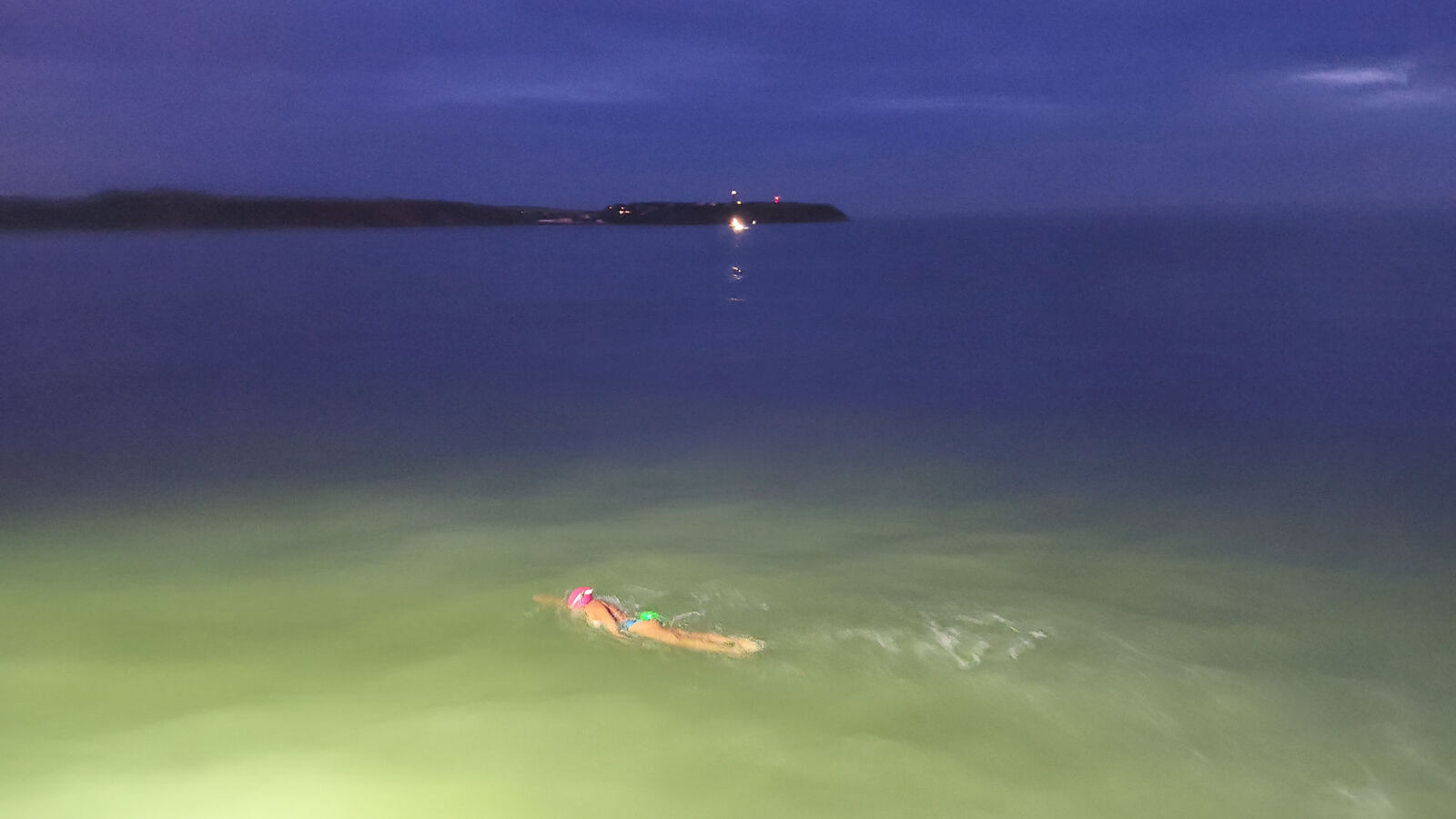
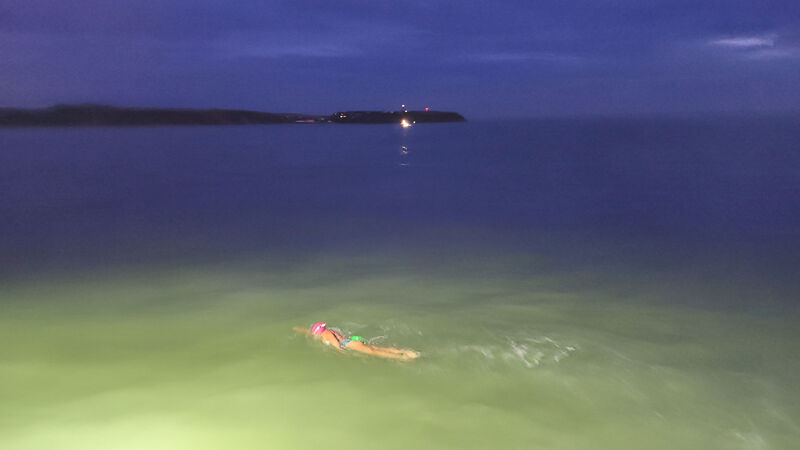
But with the wind pushing us, and Abhejali, our swimmer no 1 in the rotation, powering through the tidal change around 12 hours into the swim, just off Cap Griz Nez, while the sun was setting, she made it across the currents into the calmer bay during her 5th hour. Next was my turn again, my 5th "dip" - and I could not believe it! I only had less than one kilometer left to swim - just 18 minutes more in the dark, absolutely calm and peaceful, even with some bioluminescence. The water was warmer on the French side (around 16/17°C). Guided by the light beam from the boat, the rest of the team was allowed to swim in with me to a shallow and sandy French shore, "La Courte Dune", just between Wissant and Cap Griz Nez. They brought the Peace Torch, fuel and a lighter in a dry bag and we lit the torch and held it happily all 3 of us together, cheering, grateful and with a peace prayer in our hearts. The camera only recorded our cheers and a tiny flicker of the flame in the dark. With happy hearts, almost exhilarated, we made our way back to the boat. and we even had some bioluminescence in the dark!
Two days later, after some rest, we made our way to Kingsdown, east of Dover, to visit the Gertrude Ederle memorial at the place where Gertrude had come ashore in 1926 (she had obviously started in France, which is not allowed any more) at the end of her record-breaking 14 hour 31 minute crossing. A 20 minute dip in the sea in front of the memorial, stroking against the current almost in place, showed us the full strength of the spring tide, which we blessingfully did not have to experience during our relay!
For all three of us, the relay also was a kind of "training swim". Abhejali went on to attempt another English Channel solo, breaststroke (!) - which will be a different post, hopefully. I finished my 11th Lake Zurich marathon swim 4 weeks later (26 km in 12 hours 08) - and more may be to come for all of us.
For our Sri Chinmoy Marathon Team it was the 5th successful English Channel relay and the 4th all women relay: 6 p-relay back in 1989, 4-p-relay in 2009, 5-p-relay in 2014 and 3-p-relay now in 2006. Men's 6 p-relay in 2010.
Details and list of all team swims: https://channel.srichinmoyraces.org/members#node-4320
Our relay motto and theme song, which served as a beautiful mantra also during the swimming, was: "Only the Peace-Dreamers, Peace-Lovers and Peace-Servers can transform the world." - Sri Chinmoy
Tejvan organises short-distance running and cycling races for the Sri Chinmoy Marathon Team in his home city of Oxford. He is also a very good cyclist, having won the National hill climb championships in 2013 and finished 3rd in the National 100 Mile Time Trials in 2014.
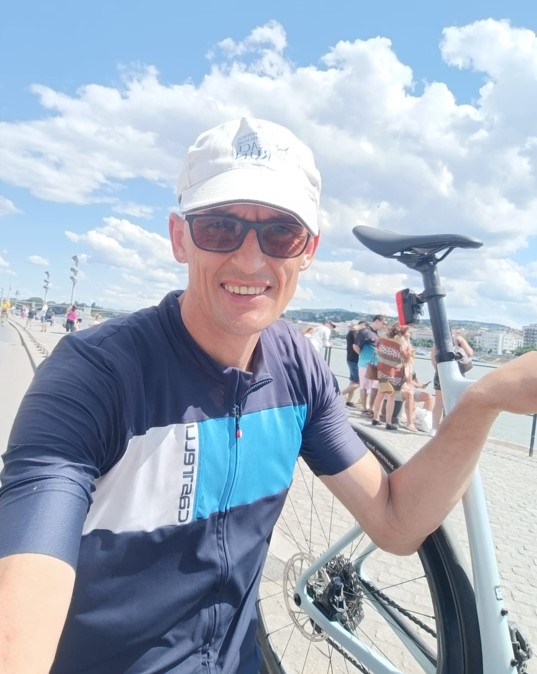
In June 2026 members of Sri Chinmoy Centre and their friends cycled together 102'167 km in 34 countries on 6 continents. Total number of participants was 259. Overall winner was Gabor Szenczi from Budapest, Hungary. Gabor cycled 5'008 km, which is the third best result on the Month of Cycling since its beginning in 2015! Agnikana Senkyrova from Zlin, Czech Republic, was the best female with total of 3'186 km.
Winners men June 2026:
Gabor Szenczi, Budapest, Hungary, 5'008 km (3'113 miles, 166.9 km/day)
Mananyu Siffert, Vienna, Austria, 4'409 km (2'740 miles, 147.0 km/day)
Kata Mandl, second place, 2'008 km, cycling in the nature near Nuremberg, Germany.
Monaco di Baviera Classic Challenge
Igor Talevski on the Alps.
From June 20 to June 25, Igor participated in the Monaco di Baviera Classic Challenge. He cycled 1'600 km over Alps and Dolomites with 31'000 m elevation gain and finished on 11. place from around 90 participants. Here is what his days on the race looked like:
Day 1: 369 km, 6'605 m elevation gain, 16h 49min cycling
Day 2: 311 km, 5'776 m elevation gain, 18h 00min cycling
Day 3: 234 km, 6'195 m elevation gain, 16h 16min cycling
Day 4: 216 km, 5'534 m elevation gain, 14h 44min cycling
Day 5: 284 km,4'197 m elevation gain, 16h 6min cycling
Day 6: 195 km, 2'643 m elevation gain, 11h 2min cycling
Ride Around Wales - A Pilgrimage to 7 Peace Statues
Rasmirvan Collinson from Bristol spent 12 days cycling around Wales covering nearly 700 miles and climbing in excess of 36,000 feet - Wales is rather undulating to say the least. He visited seven statues of Sri Chinmoy which are located in different parts of Wales.
Tejvan organises short-distance running and cycling races for the Sri Chinmoy Marathon Team in his home city of Oxford. He is also a very good cyclist, having won the National hill climb championships in 2013 and finished 3rd in the National 100 Mile Time Trials in 2014.
The Sri Chinmoy Self-Transcendence 3100 Mile Race is held on a single block in Jamaica, Queens. In many ways, it is quite an ordinary block, like many others in New York. But this block takes on a very special significance during the race, especially for the runners of the 3100 Mile Race. During the race, each runner will attempt to complete 5,649 laps of the 0.5488 mile course.
In this video, Stutisheel, (a 3100 Mile runner) captures the changing seasons from the start of the race all the way through the calender year.
Tejvan organises short-distance running and cycling races for the Sri Chinmoy Marathon Team in his home city of Oxford. He is also a very good cyclist, having won the National hill climb championships in 2013 and finished 3rd in the National 100 Mile Time Trials in 2014.
The Seattle Sri Chinmoy Marathon Team put on the 14th annual 7 & 13 Hour Self-Transcendence races. It was a perfect day with 55-degree weather in the morning, low-60s in the afternoon, and overcast skies until 3pm which kept the field of 40 runners nice and cool.
It was a great event with visiting volunteers from Chicago, Los Angeles, Minnesota, New York, Vancouver and Victoria.
Record-Breaking Performance in the Women’s 13-Hour Race
Deanna Kytonen produced a spectacular result in the Sri Chinmoy 7 & 13-Hour Races, smashing the women’s 13-Hour course record by more than two full laps (over 3 miles). Her new record stands at an impressive 72.38 miles. This achievement highlights excellent pacing and mental resilience in the cool conditions.
Margaret Yi, running on her birthday, tied the previous women’s course record, adding an emotional and inspiring highlight to the day.
Men’s 13-Hour Victory and Impressive Debut
James Yoo won the men’s 13-Hour division of the Sri Chinmoy 7 & 13-Hour Races with a remarkable 75.46 miles in his very first ultra-marathon. His outstanding debut performance demonstrated how the supportive environment of Sri Chinmoy events helps newcomers achieve exceptional results.
Standout Stories from the 7-Hour Division
In the 7-Hour race, the mother and son duo Erin and Colin Morris each placed second in their respective divisions. Together they covered more than 60 miles, showcasing the family-friendly and inclusive nature of the Sri Chinmoy 7 & 13-Hour Races. The shorter 7-hour format serves as an excellent stepping stone for runners new to ultra-distances while still offering a meaningful endurance challenge.
Race Report at Sri Chinmoy Inspiration Heart-World
Tejvan organises short-distance running and cycling races for the Sri Chinmoy Marathon Team in his home city of Oxford. He is also a very good cyclist, having won the National hill climb championships in 2013 and finished 3rd in the National 100 Mile Time Trials in 2014.
The 30th Annual Sri Chinmoy Self-Transcendence Race will be starting on 30th August 2026 in Jamaica, New York, on the famous block around Thomas Edison High School. Entrants confirmed for the race so far include a stellar field of 11 runners. It includes last year's winner, Andrea Marcato of Italy who has won the last six races. Will he be able to make it seven years in a row? Former winner Vasu Duzhiy — ODBS will also be starting. Vasu has a remarkable record of 13 finishes and 3 wins. The race also welcomes its first Indian runner and first time entrant Prashant Pethe — India. In the women's category we have two new entrants Yu Xianhui — China and Nayaja Perugini - Italy
Andrea's finish 2025
Andrea Marcato — Italy
Vasu Duzhiy — ODBS
Wei-Ming Lo — Taiwan
Radu Budan — Moldova
Stutisheel Lebedev - Ukraine
Ananda-Laharri Zuscin - Slovakia
Prashant Pethe — India
Women
Yu Xianhui — China
Annabel Hepworth — Australia
Nayaja Perugini - Italy
Nina Huang-Lan Yang — Taiwan/Japan
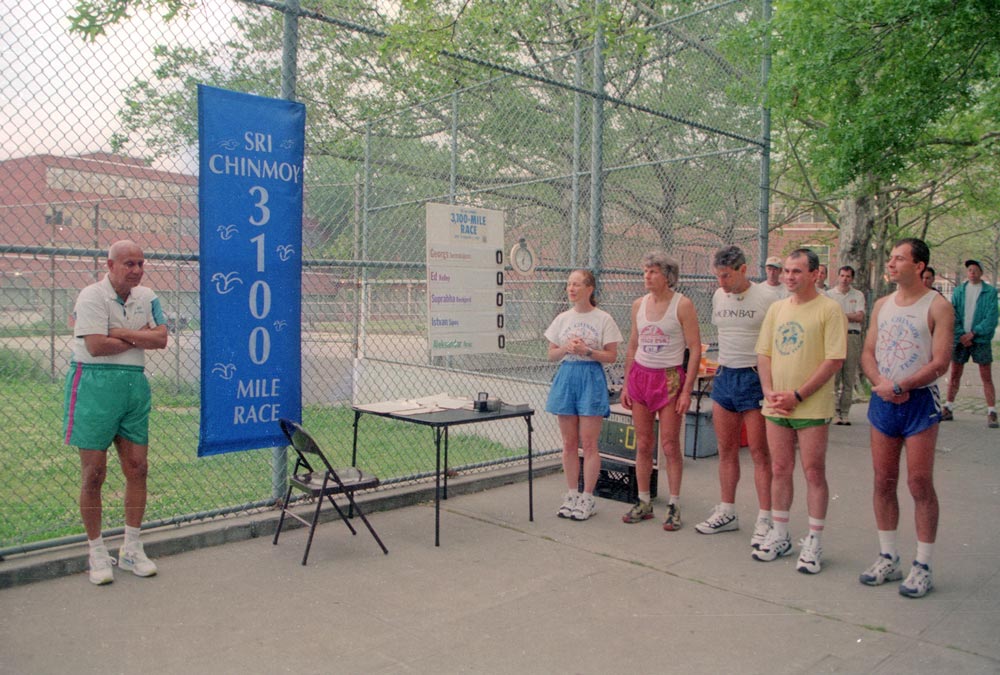
The first 3100 Mile race was held in 1997. (The previous year, there had been a 2700 Mile race)
Prize ceremony 1997. Photo Pulak
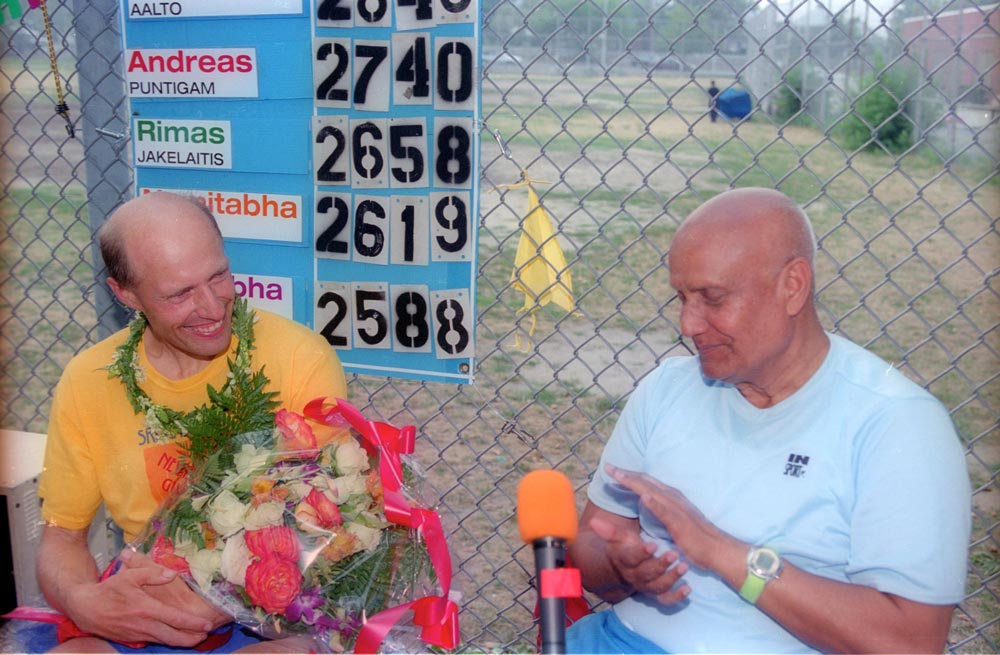
In fact, the organisers were not sure if Sri Chinmoy might increase the distance of the race again. But, at the 1997 finish ceremony, Sri Chinmoy confirmed the final distance of the race would be 3,100 miles. At this inaugural event, Sri Chinmoy remarked on the significance of this race.
"This 3,100 miles is an unprecedented journey in our world-peace-manifestation-dream. World-peace can come into existence only when we are inundated with patience and perseverance. Infinite patience we need in our inner life, and perseverance we need in our outer life.
"These 3,100 miles remind us of one divine and supreme reality: we can and must do everything at our command to transform the world of lethargy and unwillingness to be dynamic. Willingness to give, willingness to achieve, willingness to grow and glow should be the message of our souls.
"To Ed, Suprabha, Georgs and Aleksander, my soul's summit blessingful love, blessingful joy and blessingful pride I am offering unreservedly and unconditionally. Whenever I passed by you running, you reminded me of our souls' eternal, birthless and deathless journey and you reminded me of Eternity's choice runners."
— Sri Chinmoy, at the awards ceremony, 2 August 1997
Abhinandan Willis is a web designer who lives in Melbourne, Australia and has been been volunteering at Sri Chinmoy Marathon Team events since 2004.
The Sri Chinmoy Half Marathon, 10km and 5km races were held Sunday in Melbourne's picturesque Albert Park. Set around the beautiful lakeside circuit just 3km from the city centre, the event enjoyed unusually mild and sunny weather for the beginning of winter:
A total of 770 runners took part across the three distances, creating a vibrant and inspiring atmosphere. The half marathon was run on a 5km gravel circuit around the lake, offering participants both ideal running conditions and scenic views.
The video captures the start of the half marathon.
Kevin Campbell of Cambuslang took the men’s Scottish Athletics 5km road title in the annual Sri Chinmoy event at Silverknowes, Edinburgh, with his fellow club member Stefanie Tucker making it a Cambuslang double in taking the women’s title.
Pre-race rain relented just before the start, and minimal wind off the Firth of Forth led to fast times.
A small group set a good early pace, but Campbell then increased the pace, reaching the 3 km mark comfortably in front. Ben Macmillan (Falkirk) was in second, a few seconds back with a small group featuring Aberdeen’s Sean Chalmers, Cambuslang’s Callum Tharme, James Alexander (Garscube) and Robbie Ferguson (Kilbarchan) a few yards back.
Campbell continued to push the pace and was a clear winner, just missing the 14-minute barrier in 14.01. Macmillan took second in 14:08 with Chalmers in 14:12, repeating his 3rd place from 2025.
Alexander, in 5th with 14:17 took the Scottish U/20 title in a new U/20 course record of 14:17.
In the women's race, Cambuslang’s Stefanie Tucker was a clear leader at 3km. Central’s Grace Whelan, Kirsty Walker (Edinburgh AC, and Gala Harriers’ Katie Rourke were a few seconds back, followed by Lasswade’s Amy Franklin.
Tucker also stayed strong in the final 2 km to achieve her goal of dipping under 16 minutes in 15:57.
Whelan took second in 16:12, with Rourke taking the bronze medal in 16:16.
Charlotte Rose-Burton, from Edinburgh University, took the Scottish women's under-20 title in 17:12.
In the Masters Category, there was another outstanding run from Falkirk’s Fiona Matheson. She took advantage of the ideal conditions to lower the British Female V65 5km road best performance to 18:58. (gun time) This was only a week after setting a new British Masters 0/65 record over the 10km distance in Grangemouth.
Adam Gray of Penicuik took the Men's V40 title in 14:58, a second ahead of Corstorphine’s Dermot Cummins.
Moray Anderson, possibly in his first race in a new age category, took the MV50 title in 16:29, with Chris Upson of Cambuslang taking the MV60 title in 17:31.
Lothian Running Club’s Phil Jurczyk, in 41:51, was first MV80.
In the other Scottish women’s Masters titles, there were wins for Dundee Hawks, Sandy MacDougall in 17:21 at MV40, Shettleston’s Avril Masson at MV50 in 18:35.
Fife’s Innes Bracegirdle was 1st FV70 in 23:54
Kevin Campbell led Cambuslang to the team title, backed up by Callum Tharme in 4th and Ryan Thomson in 9th. Edinburgh University were second, and Shettleston were third.
The Edinburgh AC trio of Kirsty Walker, Mercss Sanchez-Oliver, and Hannah Cox took the women’s team gold medals from Central AC and Shettleston.
Results Men
Kevin Campbell. Cambuslang 14:01
Ben MacMillan Falkirk Vics 14:08
Sean Chalmers Aberdeen. 14:12
Women
Stefanie Tucker Cambuslang . 15:57
Grace Whelan Central AC 15:59
Katie Rourke Gala Harriers 16:16
Master's category positions
MV40 1. Adam Gray Penicuik Harriers 14:58
WV40 1. Sandy MacDougall Dundee HH 17:21
MV50 1. Moray Anderson Corstorphine 16:29
WV50 1. Avril Masson. Shettleston 18:35
MV60 1. Chris Upson Cambuslang 17:31
WV60 1. Fiona Matheson. Falkirk Victoria 18:58
WV70 1. Innes Bracegirdle Fife AC 23:54
WV70 2. Liz Bondi Lothian RC 29:10
MV80. Phillip Jurczyk Lothian RC 41:51
Juniors
Men U/20 1, James Alexander. Garscube. 14:17
Wom U/20 Charlotte Rose-Burton EDin Uni HH 17:12
MU17 1. Ben Baillie East Kilbride 14:43
WU17 1. Rachel Caves Harmeny 17:56
All results TBC.
A VERY BIG THANK YOU TO ALL THE HELPERS WHO CHEERFULLY HELPED, DESPITE THE DOWNPOUR OF RAIN. WE REALLY ARE VERY GRATEFUL TO YOU ALL.
Ten Runners Reach 1000 km (620 miles) at the Recent Sri Chinmoy 10&6 Race in Sofia
By Baridhi Yonchev
1 May
A record field of 30 runners attended the fifth annual Sri Chinmoy 10 Day Race in Sofia, Bulgaria.
The group was led by Gábor Rakonczay of Hungary with 1217.535 km (756.54 miles), followed by Luke Ivory (GRB) with 1179.070 km (732.64) and Marcin Józefaciuk (POL) with 1154.735 km (717.52 miles).
In the women's race, Annabel Hepworth(AUS) won with a solid 1043.265 km, and Huang Lan Yang (TWN) came second with 1019.715 km. At third place came the experienced Ilvaka Nemcova (CZE), who made an impressive push to reach the 1000 km mark with 1005.585 km or 624.84 miles.
A new course record was set in the 6 Day Race by Switzerland's Matteo Tenchio with 762.24 km (473.63 miles) plus a 72h Swiss record. The first timer, Lilien Kiss, won the women's race, reaching 603.665 km or 375.10 miles.
Tejvan organises short-distance running and cycling races for the Sri Chinmoy Marathon Team in his home city of Oxford. He is also a very good cyclist, having won the National hill climb championships in 2013 and finished 3rd in the National 100 Mile Time Trials in 2014.
In a remarkable day at the London Marathon, two elite male runners passed under the magical two hour barrier for a marathon distance during race conditions. First over the line and passing the two hour barrier was Kenyan athlete Sabastian Sawe in a world record time of 1:59:30. Second place was Yomif Kejelcha (Ethiopia) in a time of 01:59:41. Third place Jacob Kiplimo (UGA) 02:00:28 was still inside the former world marathon record. In the women's race Tigst Assefa (Ethiopia set a new women's only world record in a time of 02:15:41.
It was a record breaking race in many respects, however, history will forever place a special mention on Sabastian Sawe's first marathon under two hours. A timing that was once considered 'impossible' in a way similar to the 'four minute mile' broken by Roger Bannister on 6 May 1954. To achieve this feat required an average pace of 4:33 per mile, an average speed of 13.16 mph. Yet, with London not considered the fastest course for marathon, Sewa has already talked about the possibility of running faster. It is notable that this is only his fourth ever marathon.
Whilst certainly improvements in technology of running shoes and the science of nutrition have helped improved performance, the results also illustrates the potential for human self-transcendence and the breaking of barriers once thought impossible.
Sub-Two Hour Prediction
In 1988 Sri Chinmoy wrote a prediction about a sub-two hour marathon
"Somebody has to come from Africa and break the record. Under two hours — I envision it. Somebody will run under two hours." Run and Become, part 21
At the time, the marathon world record was 2:06:50
Sri Chinmoy with Paul Tergat, 2005
In 2005, Sri Chinmoy met Paul Tergat, the then current world record holder in a time of 2:04:05. At the time Sri Chinmoy said.
"Paul Tergat, the world’s fastest marathoner, covered the distance in two hours, four minutes. His record is four minutes over two hours, so my prediction is still hanging in mid-air!
I am praying that one day he or somebody else will run under two hours. Whoever runs under two hours will be given by me a very special honour, plus I shall meet with his plane fare and all his expenses, whether he comes from Kenya or anyplace else. I shall honour him most lovingly, cheerfully and proudly.
Who knows, who knows? There will be someone in the near future. I do not want to say in the distant future — no! In the near future, someone will be able to fulfil my prediction.
Tejvan organises short-distance running and cycling races for the Sri Chinmoy Marathon Team in his home city of Oxford. He is also a very good cyclist, having won the National hill climb championships in 2013 and finished 3rd in the National 100 Mile Time Trials in 2014.
On 19 April, the Sri Chinmoy 10 Day Race began. During the 10 day race period, there are also 3 and 6 Day races happening. The race was founded by Sri Chinmoy a pioneer of ultra distance races. The Sri Chinmoy Marathon Team have promoted multi-day races since the 1980s, with initial incarnations of multi-day races such as the 1,000 Miles and the Five Day Race. It has been a Ten Day Race since 1996.
Results 2026 10 Day Race
In the 10 day event Kyohei Yoshizawa won with a distance of 714 miles. Holding off a challenge from 3100 Mile finisher Radu Budan, who finished 2nd with 655 miles.
In the women's event Nayaja Perugini finished first with 600.6 miles, just managing to cover an average of 60 miles a day. In 2nd place was Susan Marshall with 475 miles.
Results 6 Day Race
In the six day event, Mark Dorian was the only male entrant, finishing 1st with a distance of 312.6 miles. In the women's event Gesiane Nascimento finished first with 299.1 miles. 2nd place was Mona Majkovska with 294.7 miles.
Results 3 Day
In the three day event, 3100 Mile record holder Ashprihanal Aalto finished 1st with a distance of 232 miles, and in the women, Vasuprada Funk was 1st with a distance of 151 miles.
In warm, blue-sky conditions Keith Burrows 231.107 km (Owairaka Athletic) and Siân Johnson 165.768 km (Gisborne) ran excellent races to achieve clear victories in the 28th Sri Chinmoy 24-Hour Track Races/ Athletics New Zealand Championships, at Auckland's AUT Millennium Stadium on Sat/ Sun 21-22 March 2026 ... Keith, surpassing his 2025 (men 50-54) race record by 12.195 kms, and adding a 5th NZL championship to his victories in 2020-22-23 & 2025.
Troy Field 205.222 km (Hunua) was the men's runner-up, followed by David Middlemiss 201.947 km (Hamilton City Hawkes).
Summer Yu-Fan Hsiao 159.477 km (Whangaparāoa) and promising 25-year-old Maggi Forsyth 127.200 km (Greymouth Athletic) were 2nd & 3rd women.
Jason Cameron presented Athletics New Zealand 24-hour national championship Gold, Silver & Bronze medals to the leading 3 men & women.
Winners, Keith and Siân will join previous 24-hour race champs and have their names engraved on the respective Richard Tout and Sandy Barwich 24-Hour Perpetual Trophies.
Dan Franklin 136.000 km (Tokoroa) ran a very fine (men 75-79) 24-hour race record ... adding 16.328 kms to the late Colin Clifton's 2003 mark (119.672 km).
Edwin Van Wijngaarden C33, Hank, The Netherlands (19:25:35) observed by race-walking judges, walked 100-miles (160.9344 km) in under 24-hours, and was awarded a New Zealand Centurion medal by Philip Sharp, President of the New Zealand Centurion Walkers Club.
Fellow walkers, Barend Arie De Vries C34, Tweelingstad, The Netherlands (20:48:45), Detlef Santy C35, Langemark, Belgium (21:33:13), Kim Janssens C27, Mol, Belgium (23:16:48), David Billett C31, Adelaide, Australia (23:33:44), Gunter Luypaerts C36, Antwerpen, Belgium (23:40:51), Johan Stesmans C37, Beringen, Belgium (23:40:51) and Remco Luhrman C38, Hellevoetsluis, The Netherlands (23:44:29) also achieved New Zealand Centurion/ repeat NZL Centurion status.
In the Sri Chinmoy 12-Hour Race, New Zealand 24-hour representative Wayne Botha 107.469 km (Takapuna Harriers) was the men's winner, from Dave Clarke 81.291 km (Hamilton City Hawkes)) and George Sanders 30.000 km (Malvern, USA).
Fellow New Zealand 24-hour representative Sue Hunter 107.006 km (Hamilton City Hawkes) won the women's 12-hour ... followed by her NZL team mates Dawn Tuffery 106.574 km (Hamilton City Hawkes) and Vivian Cheng 70.000 km (Wellington Harriers).
Karl Kalders 64.523 km (Owairaka Athletic) won the Sri Chinmoy 6-Hour Race ... followed by Kgomonare Mosiane 56.206 km (Hastings Harriers) and Simon Kozak 42.080 km (Auckland).
Qiqi Huang 55.057 km (Auckland) won the women's 6-hour ... followed by Michelle Kozak 50.069 km (Auckland) and Tracy Utting-Buchanan 48.081 km (Gisborne).
The 6-person 'Your Pace or Mine?' relay team (Auckland), completed 240.671 km.
Tejvan organises short-distance running and cycling races for the Sri Chinmoy Marathon Team in his home city of Oxford. He is also a very good cyclist, having won the National hill climb championships in 2013 and finished 3rd in the National 100 Mile Time Trials in 2014.
Recently there have been several events to mark the 40th Anniversary of "Historic Swims for 1986 International Year of Peace" which began in Hiroshima and Nagasaki, Japan, 1986.
This event continues a legacy that began on January 1, 1986, when three United Nations staff members—Adhiratha Keefe, Sunil Davidson, and Shraddha Howard—stepped into the frigid waters of Hiroshima, Japan. Their symbolic swim around the sacred Itsukushima Shrine on Miyajima Island launched an extraordinary worldwide movement that would span over 35 locations across continents. The original peace swimmers, members of the Peace Meditation Group at the United Nations led by Sri Chinmoy, combined contemplative practice with meaningful action. Before each swim, participants gathered to pray and meditate together, held banners displaying peace ideals, and sang inspirational songs about harmony and oneness. This powerful blend of inner reflection and outer action continues to inspire peace swims today.
The project is supporting the goals and ideals of the United Nations.
- Follows article by George Keefe
From Inner Peace to Outer Action
The inspiration for these peace swims emerged from a deep spiritual practice and personal commitment that transcended professional boundaries. All three swimmers were members of the Peace Meditation Group at the United Nations, led by Sri Chinmoy, which had been meeting regularly since 1970.
Sri Chinmoy and Swimmers for Peace.
Their personal commitment to meditation and inner peace naturally evolved into community expression beyond their official responsibilities as International Civil Servants. These swims, preceded by silence, demonstrated how contemplative practice can inspire meaningful real-world engagement and ripple outward to touch the lives of others.
Before each swim, participants would gather to pray and meditate together, creating moments of profound silence and intention. They would hold banners in various languages highlighting the 1986 UN-proclaimed International Year of Peace, sing inspirational songs about harmony and oneness, and collectively focus their hearts on creating a more peaceful world. This beautiful combination of inner reflection and outer action became the hallmark of the movement, showing that peace begins within and naturally expresses itself in service to others.
A Sacred Beginning in Hiroshima
The choice of Hiroshima for the first swim carried deep significance and profound respect.
Swimming around the sacred Itsukushima Shrine on Miyajima Island, these UN staff members chose a location that represented both the urgent need for peace and humanity’s remarkable capacity for healing and renewal. The swimmers expressed heartfelt gratitude to the local leaders and people of Japan who had turned their experience of profound tragedy into a timeless warning for humanity. Their commitment to peace and their ongoing reminder of the potential devastation of war remains a precious gift to the world—a beacon of hope emerging from darkness. Five days later, on January 6, they swam in Nagasaki Harbor, supported by the Peace Museum Director and the Mayor’s Office, honoring another community that chose to transform suffering into a powerful call for peace.
An Enthusiastic Global Response
The response was overwhelmingly positive. Media coverage was enthusiastic, with television stations, newspapers, and radio reporters eager to share this inspiring story. UN Secretary-General Javier Perez de Cuellar commended their “intrepid endeavors” and noted that “there could be no more fitting venue than Hiroshima and Nagasaki to make such a demonstration.”
This encouragement fueled the swimmers’ determination to spread their message of hope even further.
A Journey of Unity Across Continents
Inspired by this warm reception, the swimmers joyfully continued their mission throughout 1986 and into 1987, traveling at their own expense to beaches, harbors, and lakes across the globe. Their journey became a celebration of humanity’s shared aspirations for peace. They brought their message to diverse locations—from the turquoise waters of Bermuda to the Dominican Republic, from Puerto Rico to Costa Rica, from Panama to Chile, Brazil, Uruguay, Bolivia, and Peru. They swam in American locations including Virginia Beach, Myrtle Beach, Charleston, New Orleans, Phoenix, and San Diego. At each stop, they found communities eager to embrace the vision of a more peaceful world, united in the understanding that we are all part of one human family.
A Message That Endures
Video by Utpal
The 2026 anniversary swims are highlighting the continued importance of the goals of the UN Charter, the Universal Declaration of Human Rights, and the timeless message of the Golden Rule: “Do unto others as you would have them do unto you.”
These principles remain as vital and inspiring today as they were forty years ago, offering a roadmap for building the peaceful world we all wish to see.
The Power of Inspired Action
What made these swims remarkable was their blend of spiritual inspiration and practical dedication. The swimmers didn’t wait for perfect conditions or elaborate planning—they acted on their vision with courage and faith.
They worked joyfully with local communities, media, and peace organizations wherever they went. Their approach was wonderfully inclusive, welcoming anyone who wished to participate, witness, or support their message. This openness created connections across cultures, languages, and backgrounds, demonstrating that peace is indeed possible when hearts unite in common purpose.
Continuing the Legacy Today
Today, as we mark the 40th anniversary, commemorative swims have already taken place in Croatia—in Dubrovnik on January 1, 2026, and Split on January 8—bringing together new generations in the same spirit of meditation, prayer, and peaceful action.
These anniversary celebrations show that the vision planted forty years ago continues to flourish, inspiring new swimmers to take the plunge for peace.
An Enduring Message of Hope
The peace swims remind us that individual actions, rooted in deep inner practice and carried out with dedication and love, can create positive waves that reach around the world. They demonstrate that working for peace doesn’t require elaborate resources—just sincere commitment, heartfelt intention, and the courage to transform inner conviction into outer action. As we face contemporary global challenges, the example set by these dedicated swimmers forty years ago offers timeless wisdom and genuine hope: combine contemplation with action, embrace practical solutions, and never underestimate the power of individuals working together with open hearts for humanity’s highest aspirations.
The cold waters of Hiroshima welcomed three courageous souls on that New Year’s Day in 1986. Their warm hearts created ripples that continue to spread today, reminding us all that peace is not merely an ideal to contemplate—it is a living reality we can create together, one dedicated action at a time.
Article by George Keefe (brother of Adhiratha Keefe)
More articles on swimming for Peace are available at